The finish on a box does more work than most brands realize. It shapes how colors read under store lighting, how a logo catches a shopper’s eye, and how premium a product feels before the box is even opened. Two of the most common finishing options, full UV and spot UV, create very different effects, and understanding full UV vs. spot UV helps you match the right coating to your brand and product.
What Is Full UV Finishing?
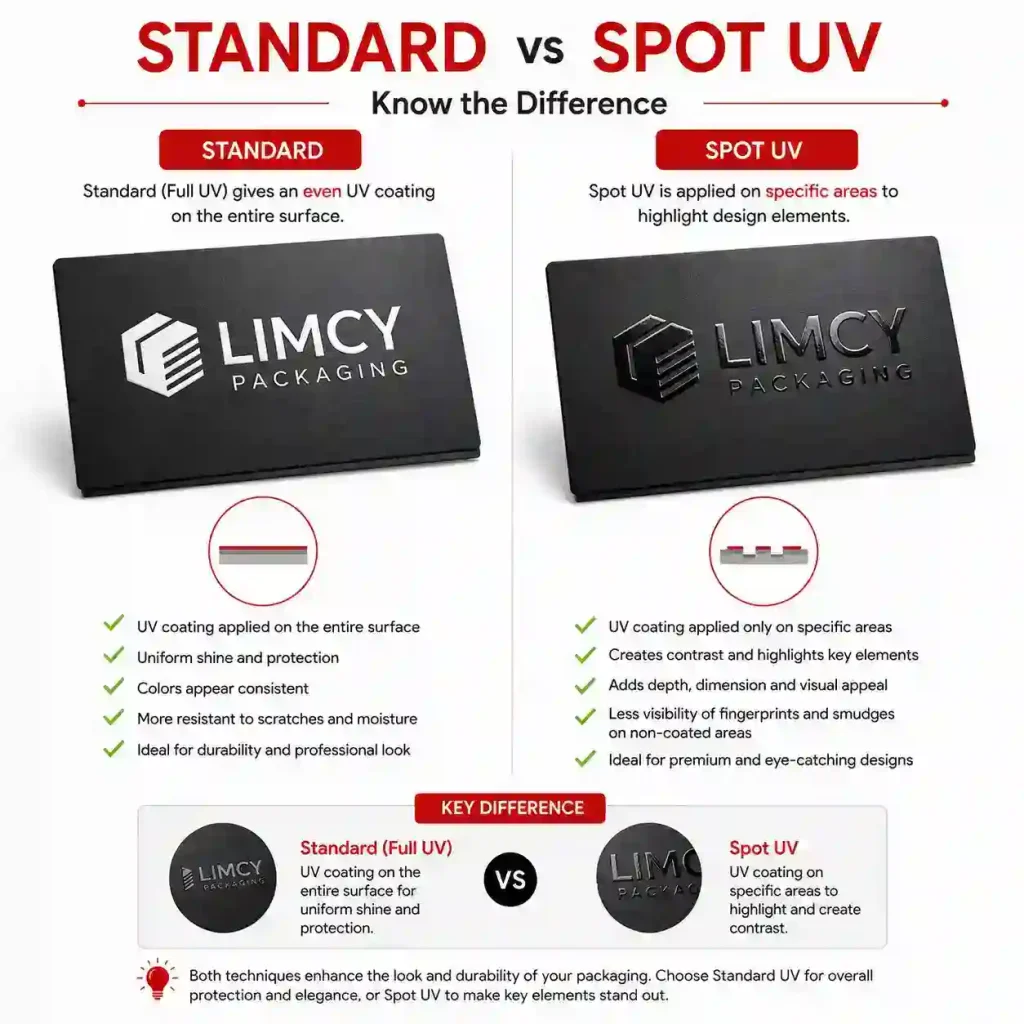
Full UV finishing, sometimes called flood UV or full-surface UV coating, applies a clear UV-cured coating across the entire printed surface of a box. The coating is cured instantly under ultraviolet light, leaving a smooth, high-gloss surface from edge to edge. This all-over gloss finish makes colors look richer, and graphics appear sharper.
Because it covers the whole panel, full UV coating works well for bold photography, vivid color blocks, and busy retail artwork. Food packaging, promotional boxes, and image-heavy consumer goods often use full UV packaging to make the design pop on a shelf. The uniform shine gives the entire box a polished, retail-ready look without highlighting any single element.
What Is Spot UV Finishing?
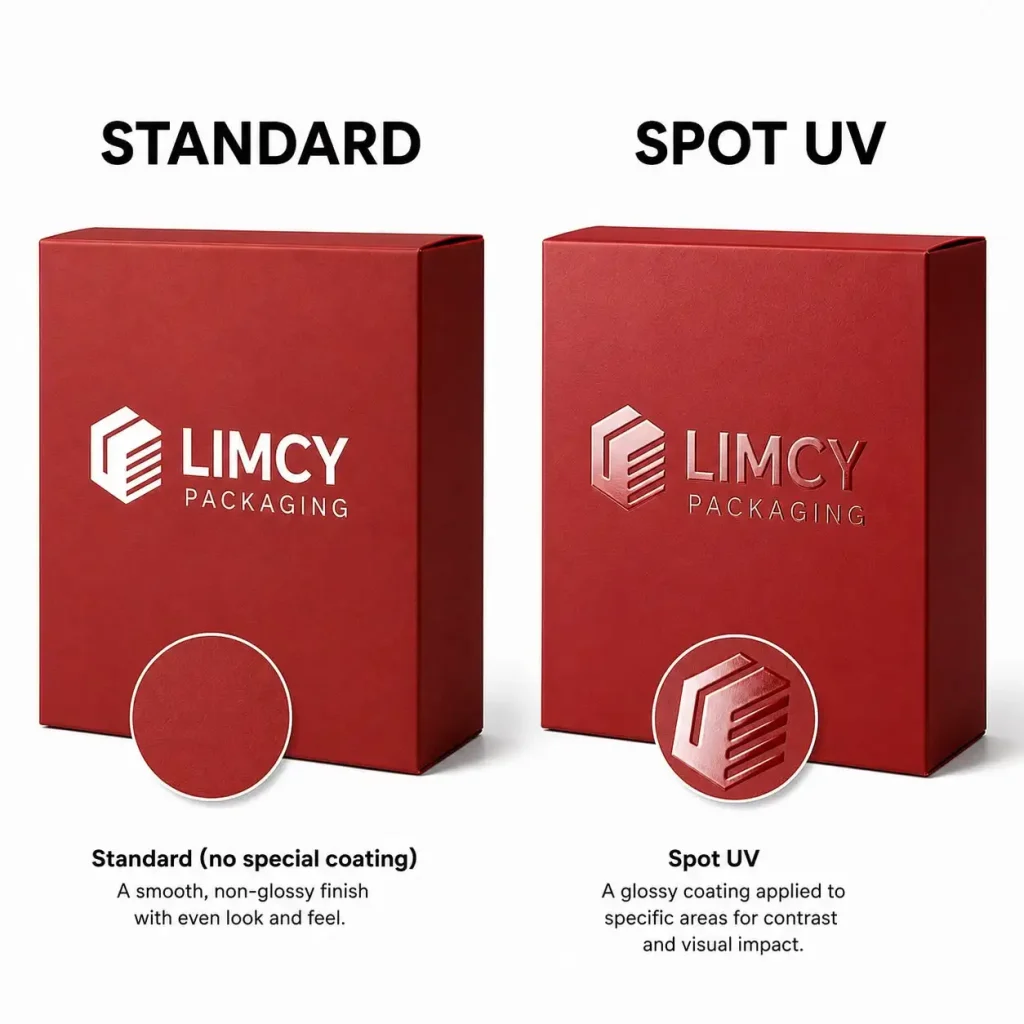
Spot UV finishing takes the opposite approach. Instead of coating the whole surface, it applies a clear glossy coating only to selected parts of the artwork, guided by a Spot UV mask built into the print file. Brands typically use it on logos, product names, icons, patterns, or key text.
This selective gloss coating creates contrast, especially when placed over a matte or soft-touch background. The result is a subtle but noticeable highlight that draws the eye without shouting for attention. Spot UV printing is popular for brands that want a refined, detail-focused finish rather than an all-over shine.
Full UV vs. Spot UV: A Quick Comparison
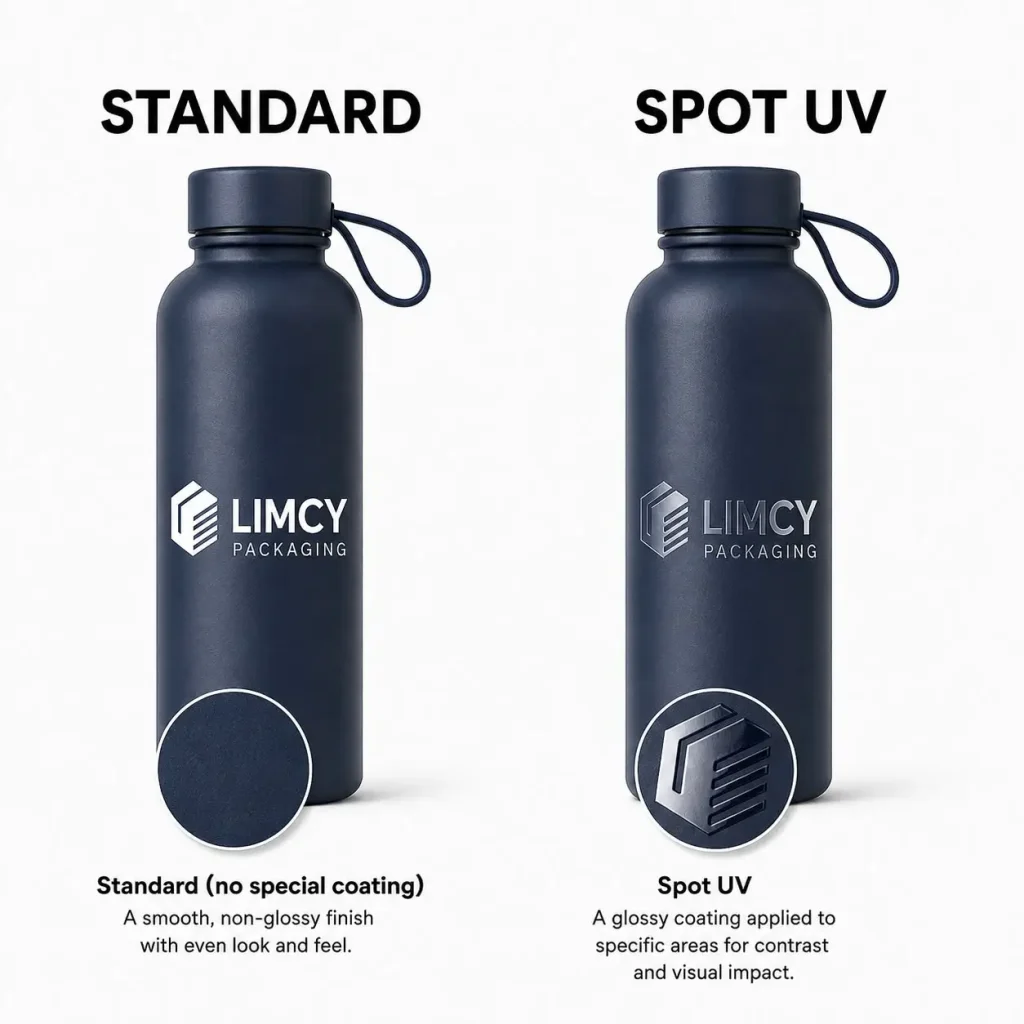
Comparing full UV vs. spot UV side by side makes the differences easier to see in practice.
| Factor | Full UV | Spot UV |
| Coverage | Entire printed surface | Selected artwork areas only |
| Appearance | All-over high-gloss surface | Matte background with glossy highlights |
| Main purpose | Boost overall color vibrancy. | Create contrast and visual hierarchy. |
| Artwork setup | No separate mask needed | Requires a precise Spot UV mask layer |
| Best packaging style | Image-led, colorful designs | Minimalist, logo-focused designs |
| Typical uses | Food boxes, promotional packaging | Cosmetic boxes, rigid gift boxes |
When Full UV Is the Better Choice
Full UV coating suits packaging that leans on color and imagery to sell the product. Vivid graphics, photography, and colorful branding all benefit from the added depth an all-over gloss finish provides. Children’s products, promotional packaging, and image-led retail boxes often choose this route because the shine amplifies visual impact.
However, full UV isn’t right for every design. Under bright store lighting, a fully glossy surface can create glare that makes artwork harder to read from certain angles. Text-heavy packaging should be reviewed carefully before choosing full UV, since small type can lose clarity against a glossy background.
When Spot UV Is the Better Choice
Spot UV coating fits brands that want restraint over spectacle. Premium cosmetic packaging, luxury rigid boxes, and branded gift boxes often rely on it to add a quiet, upscale touch. Minimalist apparel packaging also benefits, since a soft-touch or matte background paired with a glossy logo feels deliberate and high-end.
Spot UV works best when used sparingly. Applying it to just one or two meaningful design elements, like a wordmark or a small icon, keeps the effect purposeful. Overusing it across too many areas can dilute the contrast that makes spot UV packaging effective in the first place.
How to Choose Between Full UV and Spot UV
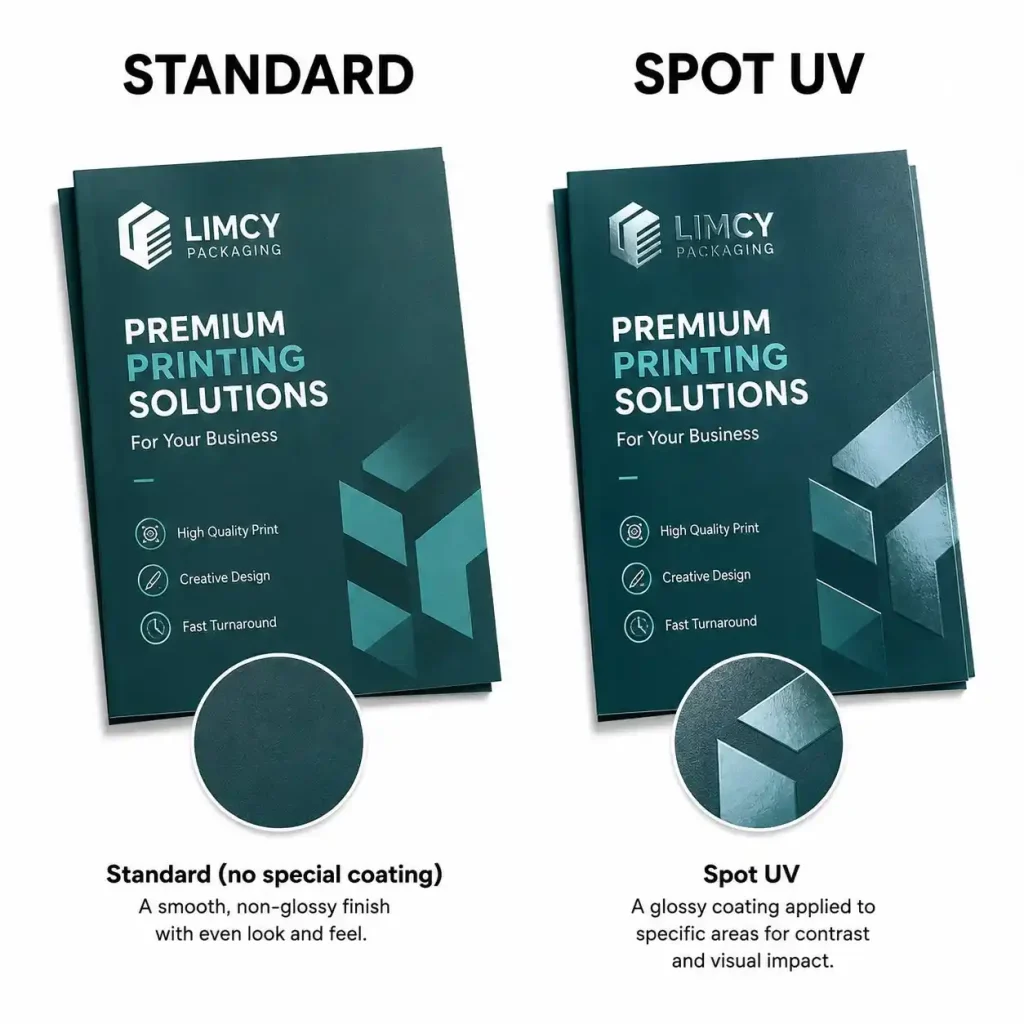
The right choice depends on your packaging format and your brand’s visual priorities. Consider which finish fits your product category:
- Spot UV—custom cosmetic boxes, Mylar bags, hang tags, and labels for a controlled, premium feel
- Full UV—food boxes, mailer boxes, and retail boxes with photography-heavy artwork, for maximum shelf appeal
When weighing full UV vs. spot UV, think about whether your artwork needs an all-over lift or a focused highlight. Full UV suits brands seeking uniform shine across colorful designs, while spot UV suits brands seeking selective attention on a logo or key detail. Final appearance and performance can vary depending on packaging material, artwork design, ink coverage, coating method, and handling conditions, so testing a sample is always worthwhile.
Create UV-Finished Packaging With Limcy Packaging
Limcy Packaging produces custom boxes, cosmetic packaging, food boxes, rigid gift boxes, retail boxes, labels, sleeves, paper bags, and other custom printed packaging solutions for growing brands. Available finishing options include gloss UV, matte UV, spot UV, matte lamination, gloss lamination, foil stamping, and embossing, so you can match the finish to your artwork and product category.
If you’re still deciding on full UV vs. spot UV for your next packaging run, reach out to Limcy Packaging for a custom quote. Share your artwork, product category, and preferred finish, and the team will help you find the right coating for your box.
FAQs
Q1. Can I combine full UV and spot UV on the same box?
Ans. No, they’re two different processes. Full UV coats the entire surface, while spot UV targets specific areas, so a box typically uses one or the other based on the design.
Q2. Does spot UV work on matte packaging?
Ans. Yes, spot UV is commonly paired with matte or soft-touch backgrounds. The contrast between the matte surface and the glossy highlighted area is what makes the finish stand out.
Q3. Which finish is better for text-heavy packaging?
Ans. Spot UV is usually easier to control on text-heavy designs, since full UV’s all-over gloss can sometimes create glare that affects readability under certain lighting.