Packaging often gets judged before a customer ever lifts the lid open. A logo that catches the light or a design you can feel clearly under your fingertips tends to stay in memory longer than flat printed artwork. That’s the idea behind tactile finishing, and it’s why so many brands compare embossing vs debossing before choosing a final look for their custom packaging. Both methods add depth and texture to a box, but each creates a distinct visual and physical result.
Packaging That Customers Can Feel
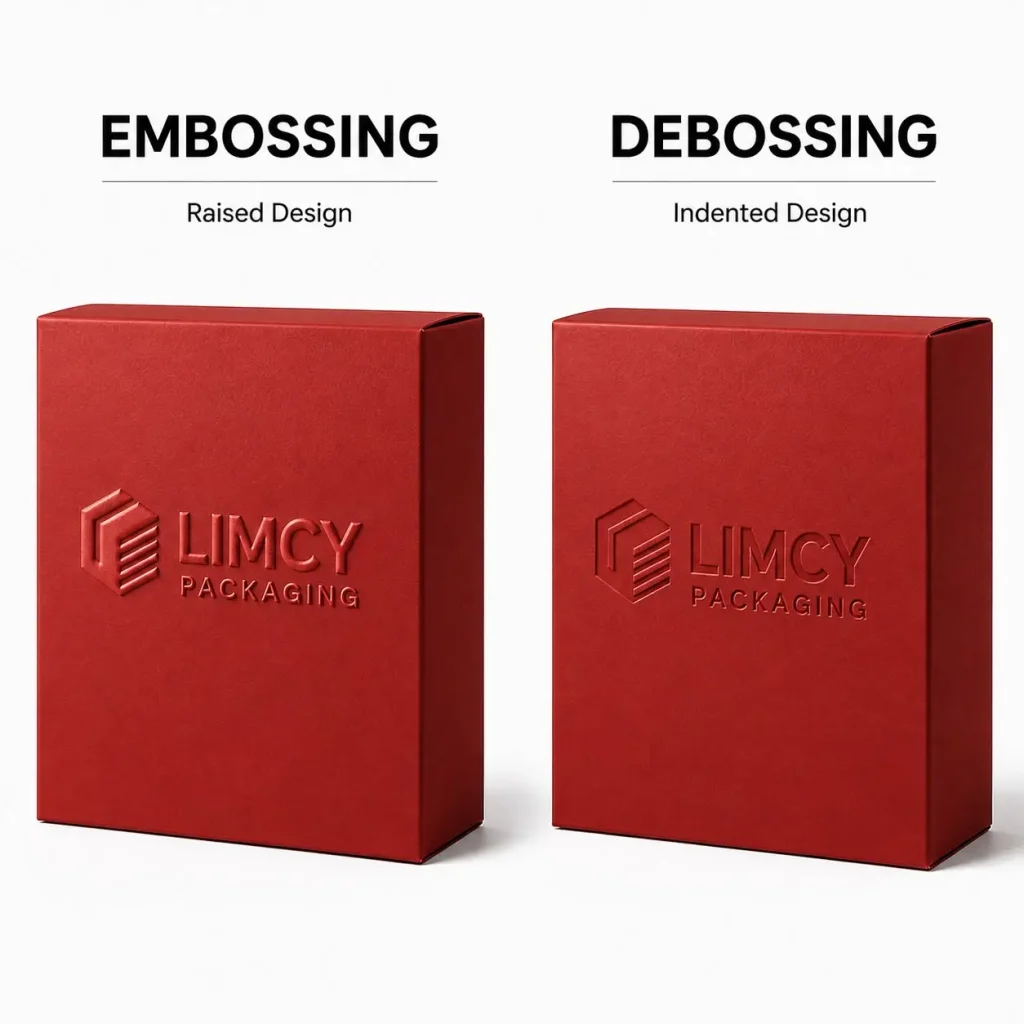
Tactile details matter most where the unboxing moment carries weight. Luxury brands, gift businesses, cosmetic companies, jewelry sellers, and premium retailers all rely on that first physical impression to set expectations. A raised or pressed-in logo reads as more deliberate than flat ink, because the customer notices it with their hands, not just their eyes. This kind of visual depth turns a simple box into part of the product story, especially on rigid boxes and paperboard packaging.
What Happens During Embossing?
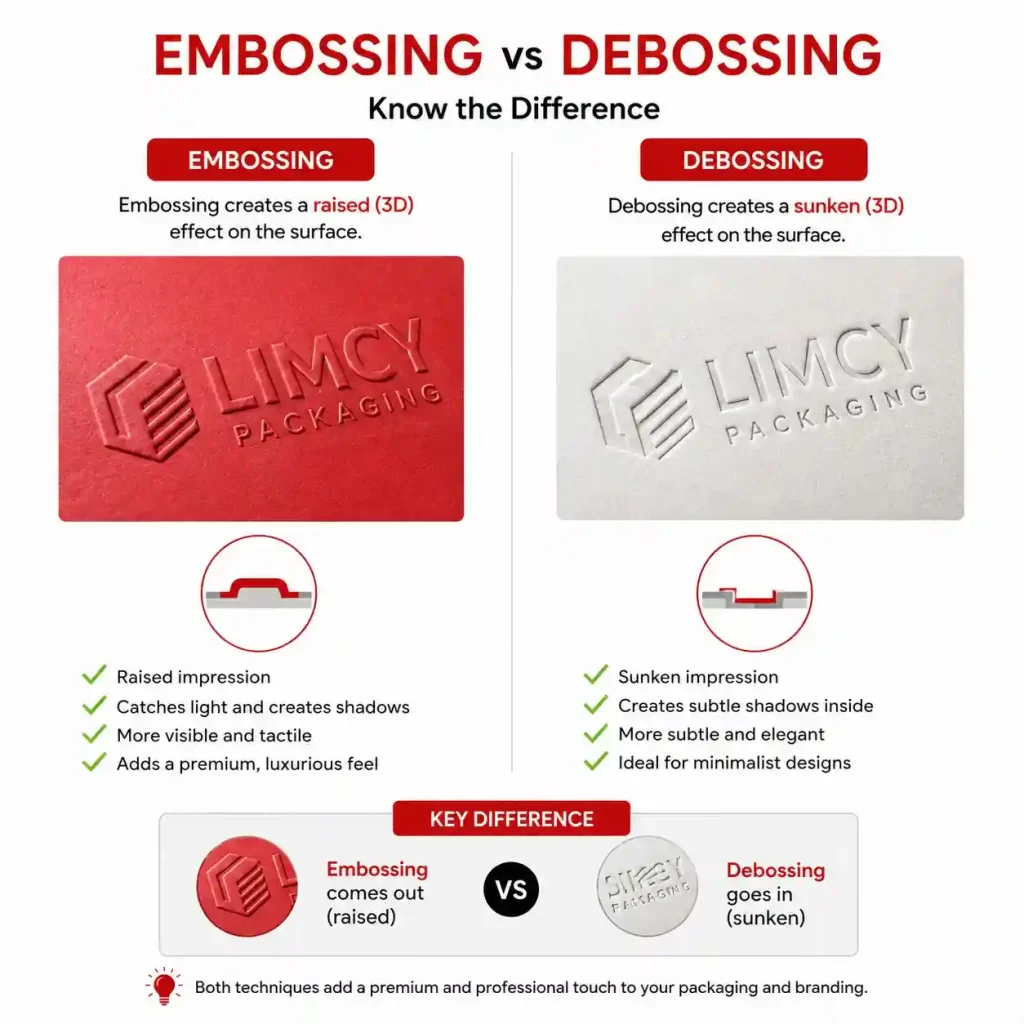
Embossing uses a metal die to press selected artwork so it sits above the surface of the packaging, creating a raised design. The die-stamping process pushes the material from beneath, producing a dimensional, noticeable effect that catches light from different angles. As a result, embossing tends to suit bold logos, monograms, larger text, and featured artwork. It works especially well on rigid boxes, cosmetic packaging, and branded gift boxes, where a stronger visual statement is welcome.
What Happens During Debossing?
Debossing does the opposite: the die presses artwork downward, creating a recessed design that sits below the packaging surface. The indented impression gives an engraved appearance that feels subtle and refined, rather than bold. Because of that restraint, debossing suits minimalist logos, luxury apparel boxes, premium skincare packaging, and understated gift boxes. It also reads well on textured materials, where a raised design might compete with the surface instead of complementing it.
Embossing vs. Debossing: What Changes on the Box?
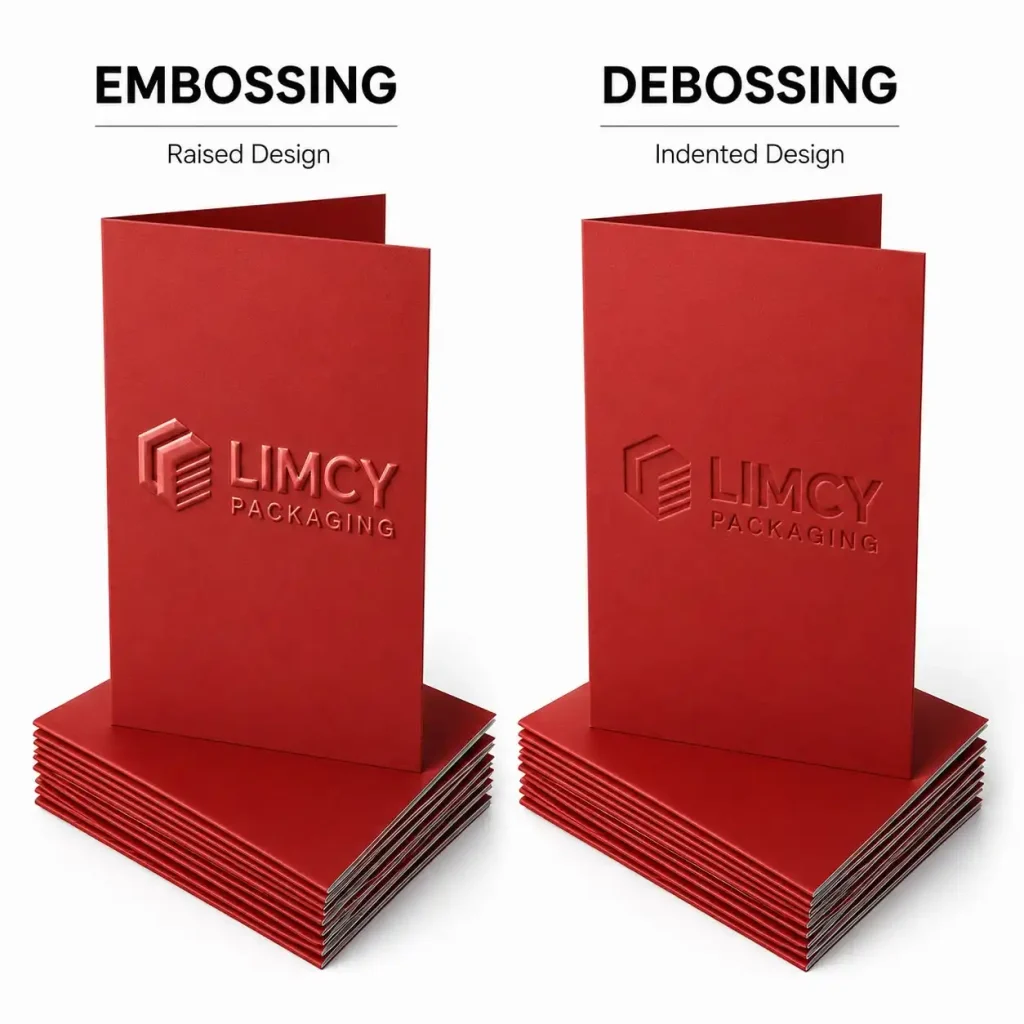
Once you understand embossing vs debossing individually, the differences on a finished box become easier to spot. Here’s a quick side-by-side comparison:
| Feature | Embossing | Debossing |
| Surface effect | Raised design | Recessed design |
| Visual style | Bold, dimensional | Subtle, engraved |
| Tactile feel | Pronounced | Understated |
| Best logo style | Monograms, bold text | Minimalist marks |
| Ideal packaging types | Rigid boxes, cosmetic boxes | Apparel boxes, skincare boxes |
| Suitable add-ons | Gold or silver foil | Soft-touch lamination |
Choose Embossing for a Stronger Visual Statement
Embossing works best when a brand wants its logo to be the focal point. Perfumes, jewelry, luxury cosmetics, and corporate gifting often lean toward embossed packaging because the raised design draws the eye immediately. Pairing embossing with gold foil, silver foil, or a matte background can sharpen that focal point even further. In contrast, a plain finish without added contrast may soften the impact embossing is meant to create.
Choose Debossing for a Quiet Luxury Look
Debossing suits brands that favor a modern, restrained identity over a loud one. Soft-touch packaging, deep-color boxes, neutral palettes, and leather-inspired presentation all pair naturally with a recessed logo. Minimalist skincare and fashion packaging benefit from this quieter approach, because the design still reads clearly without dominating the box. Too many competing visual effects, however, can weaken a minimal design rather than strengthen it.
Match the Finish to Your Artwork and Packaging Material
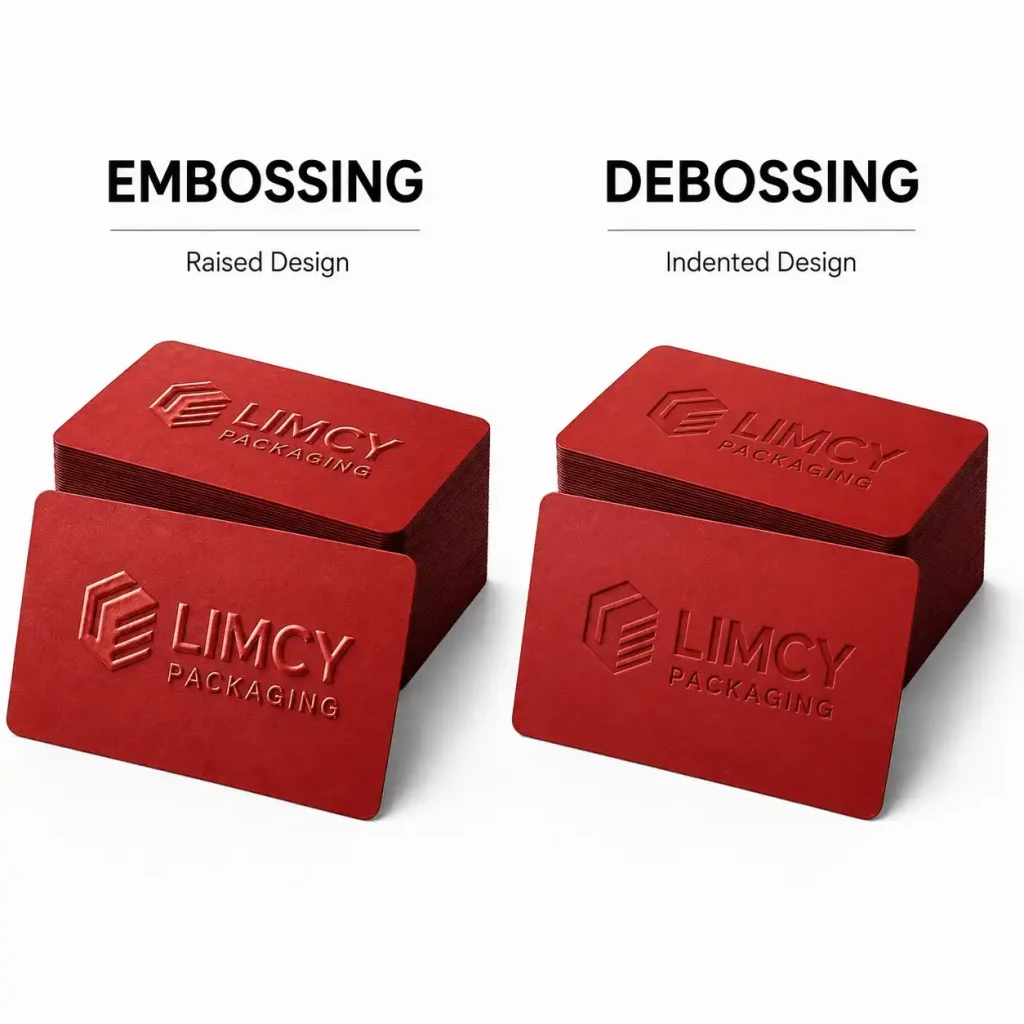
Before settling on either option, it helps to review a few practical details with your packaging partner:
- Logo size, line thickness, and spacing
- Board thickness and box material
- Placement near folds or corners
- Alignment with existing printed artwork
Designs with very fine lines or tiny details may need adjustment before embossing or debossing, since both processes rely on precise die setup. The final result can also vary based on artwork complexity, design size, and production method, so a test run is often worthwhile before a full production order.
Build Premium Custom Packaging With Limcy Packaging
Limcy Packaging offers custom rigid boxes, luxury gift boxes, cosmetic boxes, apparel packaging, and other retail-ready packaging solutions. Brands can explore embossing, debossing, foil stamping, Spot UV, matte lamination, gloss lamination, and soft-touch finishes depending on their artwork and packaging goals. Every project starts with a simple conversation about logo detail, box style, and material, so the finishing choice actually fits the design well.
If you’re weighing embossing vs debossing for your next packaging order, Limcy Packaging can help you decide. Request a custom quote today and talk through your logo, preferred box style, material, and finishing requirements with our team.
FAQs
Q1. Is embossing or debossing better for a small logo?
Ans. Debossing usually works better on small or minimalist logos, since the recessed effect stays clean without needing extra visual weight.
Q2. Can embossing and debossing be combined on the same box?
Ans. Yes, some designs use both—for example, an embossed logo alongside a debossed pattern—though this depends on artwork complexity and die setup.
Q3. Does the packaging material affect the finish?
Ans. Yes, board thickness and material type both influence how sharp or subtle the final embossed or debossed result looks.
Q4. Which finish suits luxury cosmetic packaging?
Ans. Both work well, but embossing tends to suit bold branding, while debossing suits a more understated, premium look.
Q5. Can foil stamping be added to embossed or debossed designs?
Ans. Yes, foil stamping is often paired with embossing for extra contrast, while debossing is more commonly paired with soft-touch lamination.