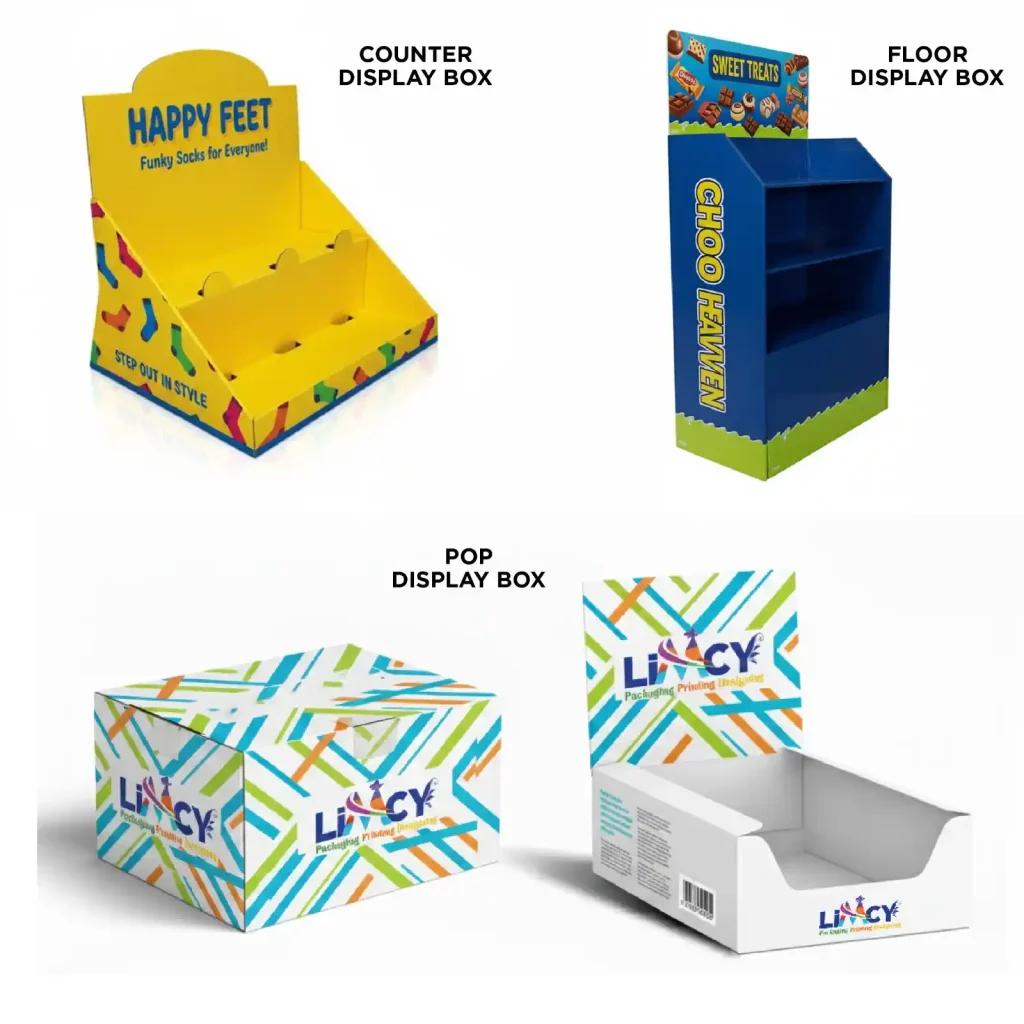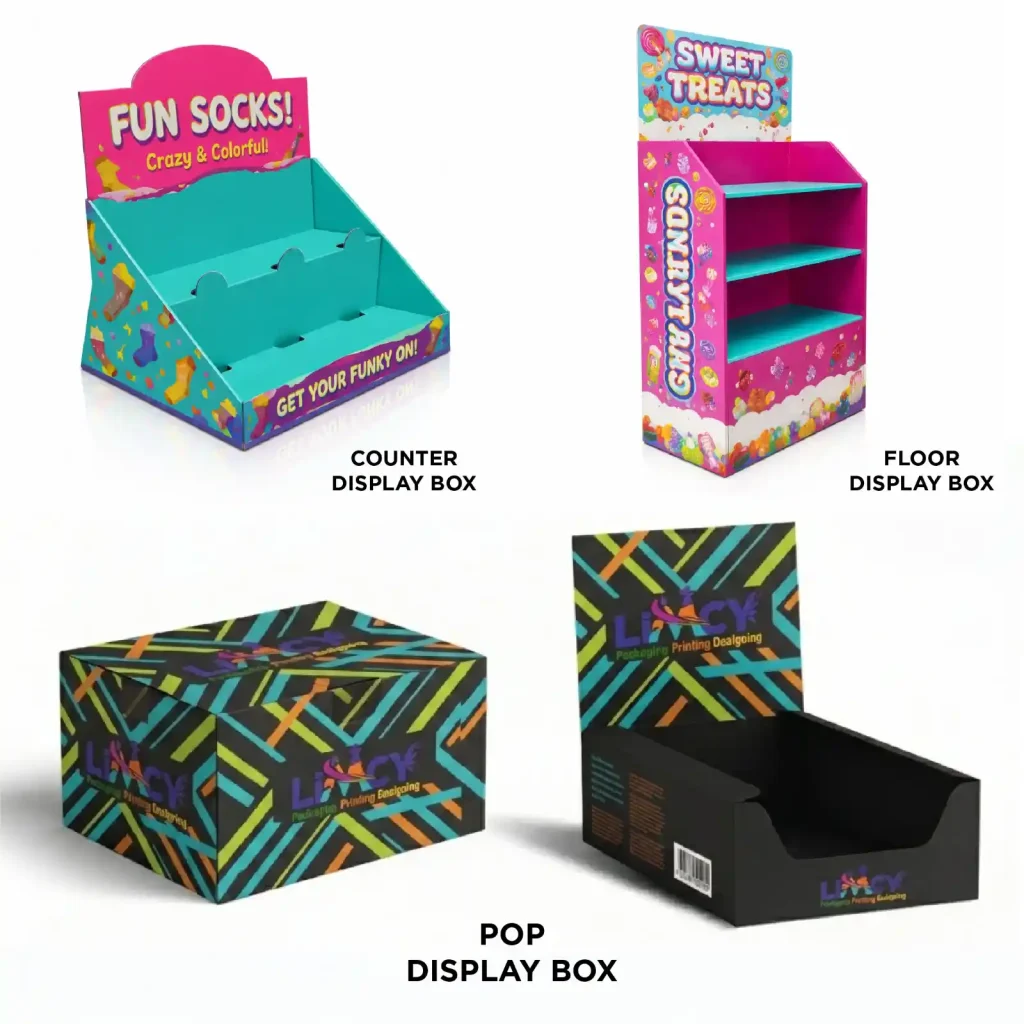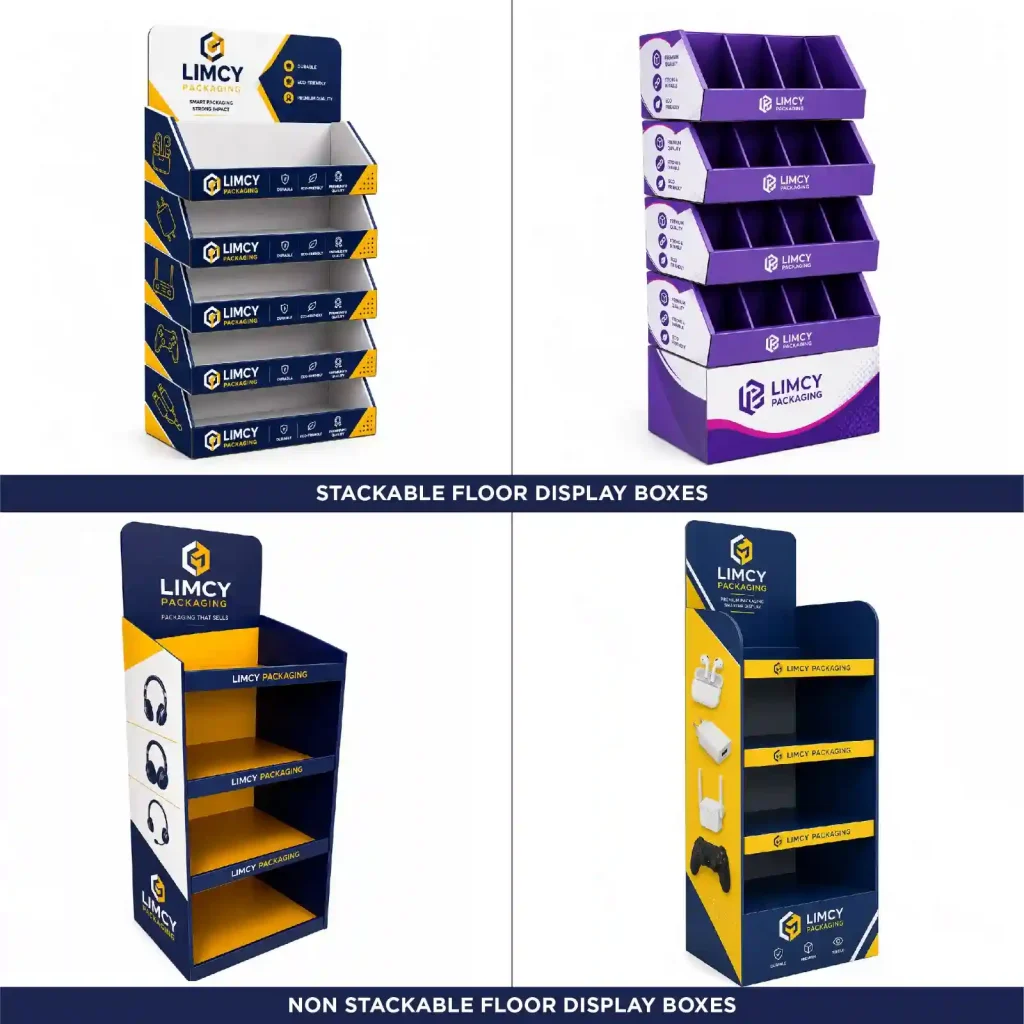
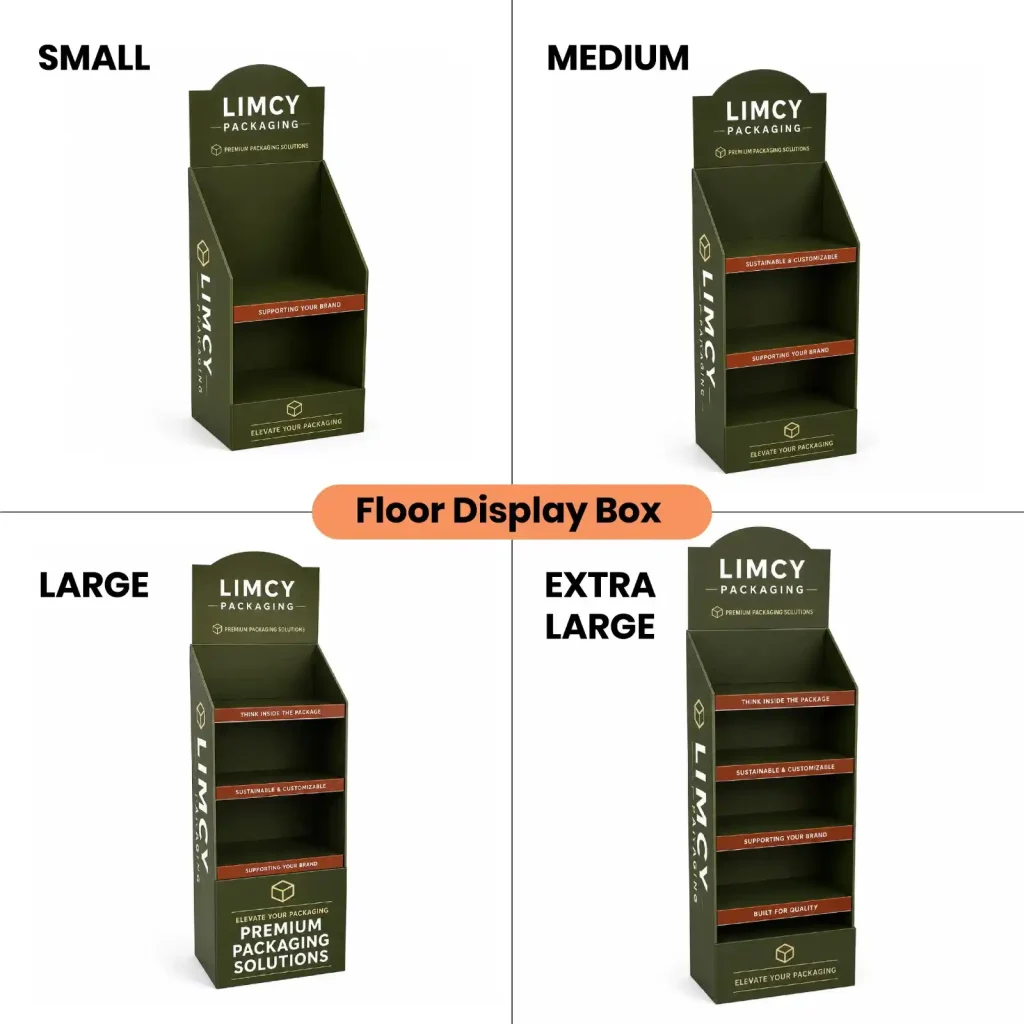
Choosing the right floor display box size can make the difference between a display that grabs attention and one that gets lost in a busy aisle. Floor display boxes are freestanding retail units that sit in high-traffic areas to promote specific products. Because these displays sit on the sales floor, size affects product visibility, floor space, and shopper safety all at once. So, getting floor display box sizes right takes some planning, but it doesn’t have to be complicated. Limcy Packaging works closely with retailers and brands to figure out sizing that fits both the product and the space.
What Is a Floor Display Box?
A floor display box is a freestanding retail display that holds and presents products without needing a shelf or counter. Most brands build these units from cardboard or corrugated material, since these materials offer a good balance of strength and weight. As a result, retailers place POP floor displays in aisles, endcaps, store entrances, checkout zones, and other promotional areas because they draw attention without requiring permanent store fixtures. In addition, a well-built display can hold products securely for the duration of a promotion, and staff can remove it once the promotion ends.
Why Floor Display Box Size Matters
Size matters because it touches nearly every part of how a display performs:
- Display height—eye-level placement vs. getting overlooked
- Display width and depth—floor footprint in narrow aisles
- Product visibility—shaped by the display’s form and arrangement
- Product capacity—how often an associate needs to restock the unit
- Shelf access and shopper reach—ease of browsing
- Aisle clearance—keeps walkways safe
- Structural stability—keeps the unit from tipping
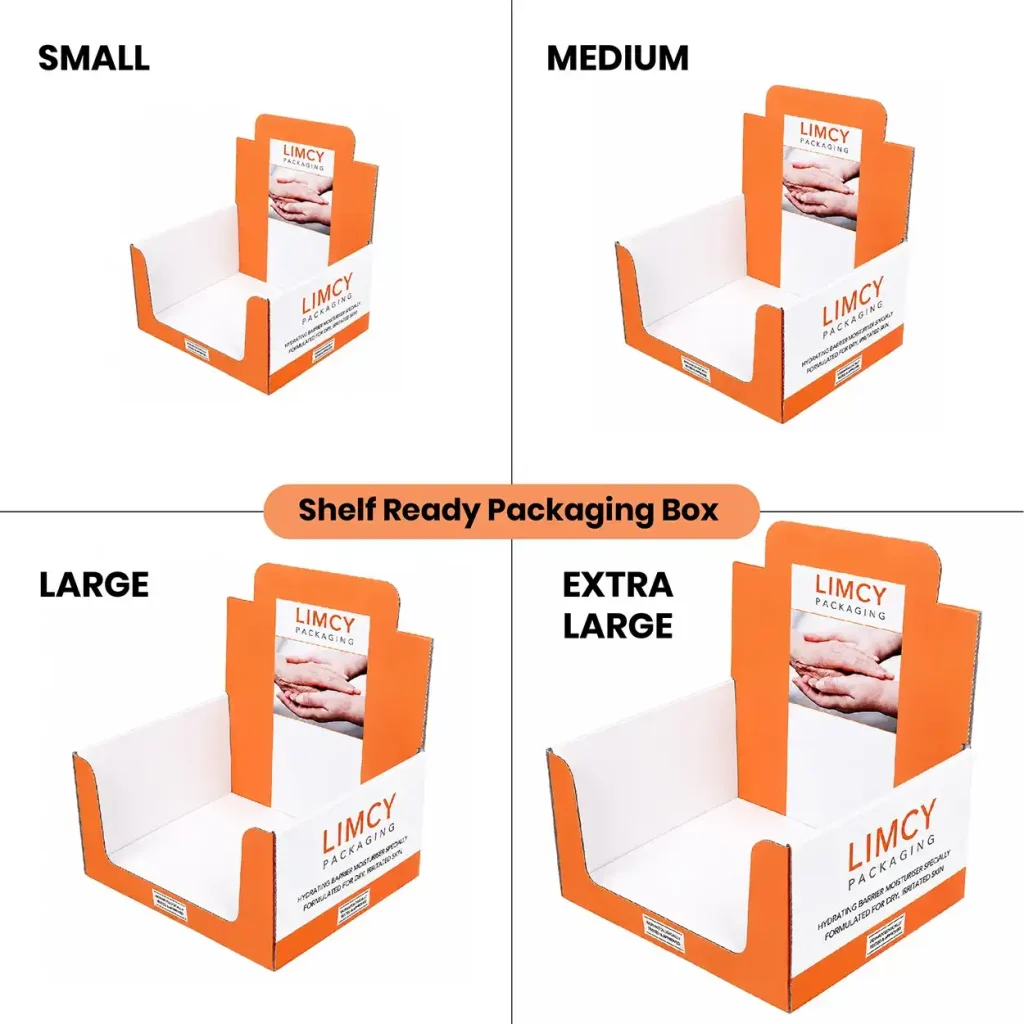
Small Floor Display Box Sizes
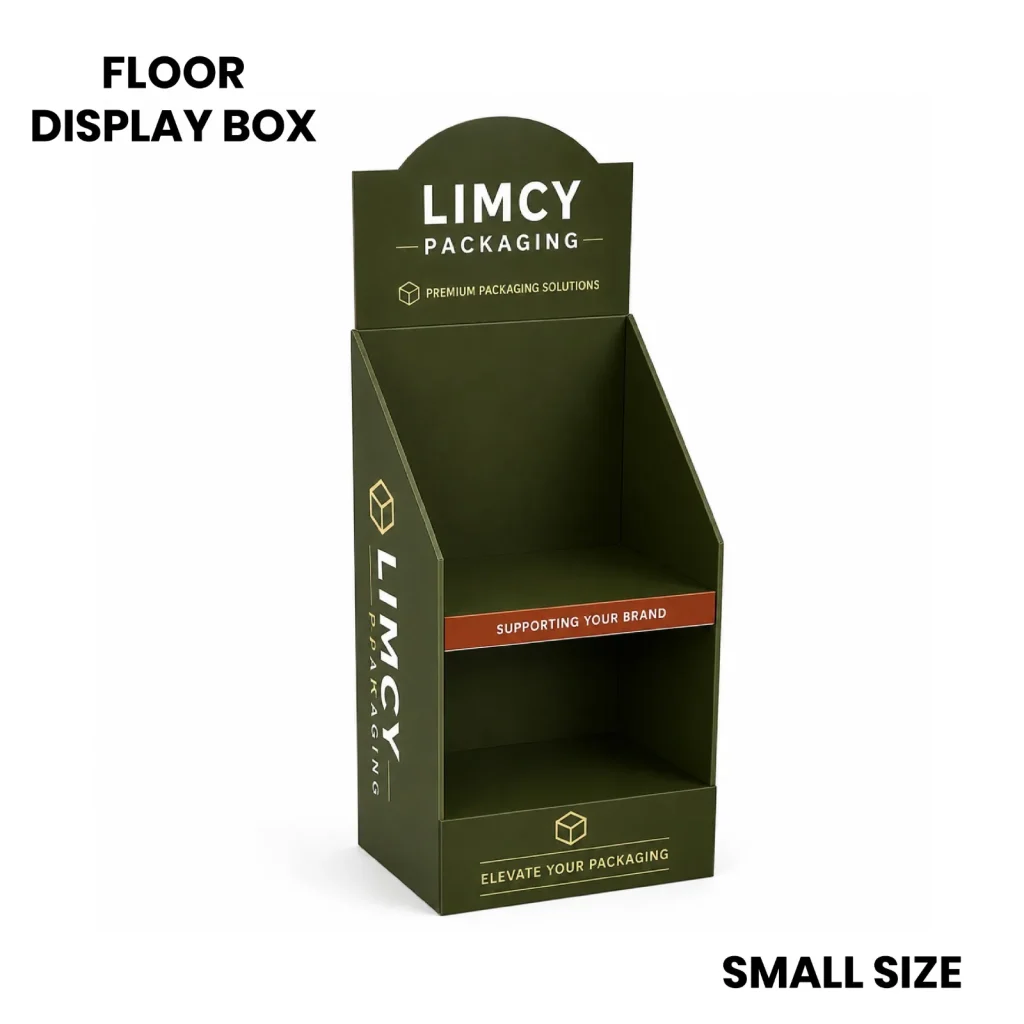
Small floor displays generally suit compact, lightweight products such as candy, cosmetics, accessories, snacks, or sample-sized items. Because these units usually have a smaller floor footprint, they fit well in narrow aisles, checkout areas, or entryway promotions. Since they hold less product, small displays are also easier to move and reposition as needed, and manufacturers typically build them from lighter cardboard. Overall, retail floor display sizes in this category work well for short-term promotions or limited-run launches.
Medium Floor Display Box Sizes
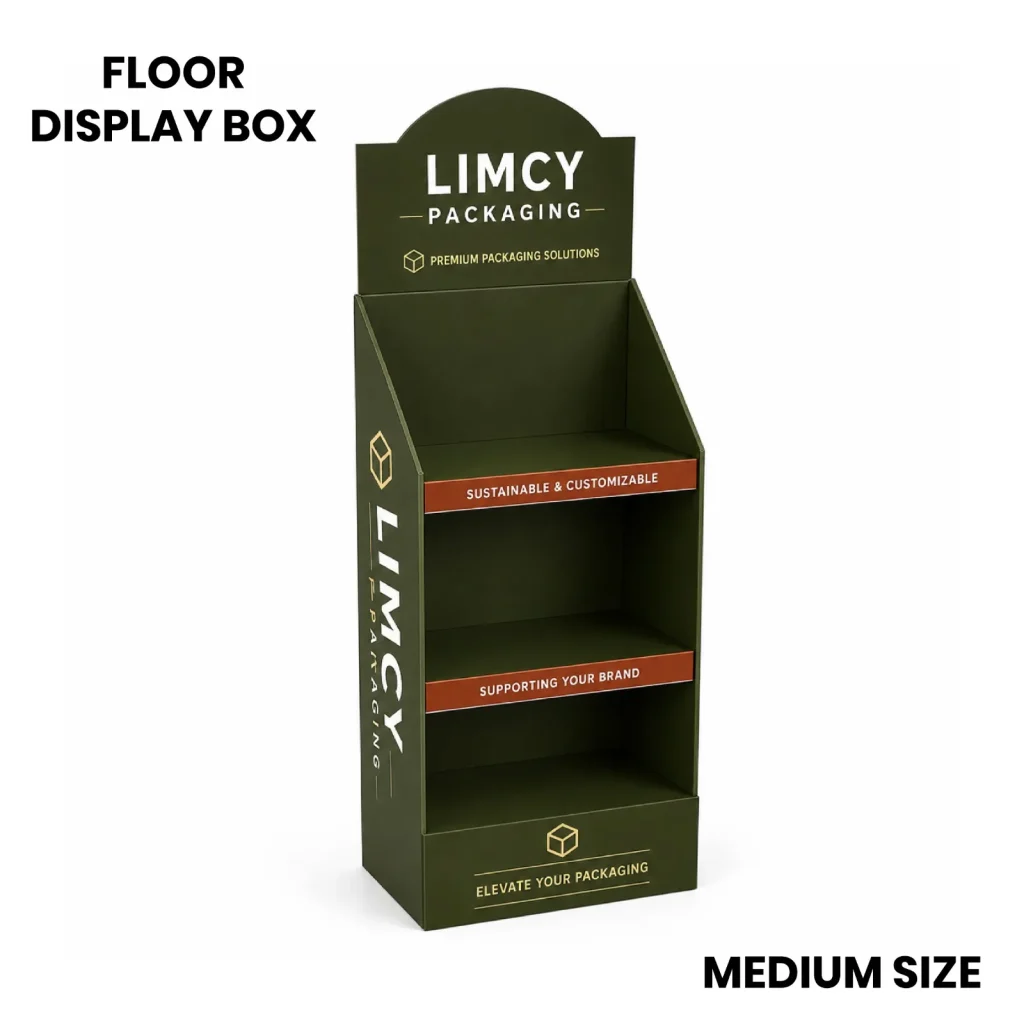
Medium floor display box sizes are common in standard retail aisles, and they often include multiple shelves for better product organization. This size tends to suit personal-care products, boxed goods, beverages, and other everyday retail items. Meanwhile, a medium unit balances footprint and capacity, so it can hold a reasonable volume of product without overwhelming the surrounding space. For that reason, retail floor display units at this size suit brands that need steady visibility without a massive footprint.
Large and XL Floor Display Box Sizes
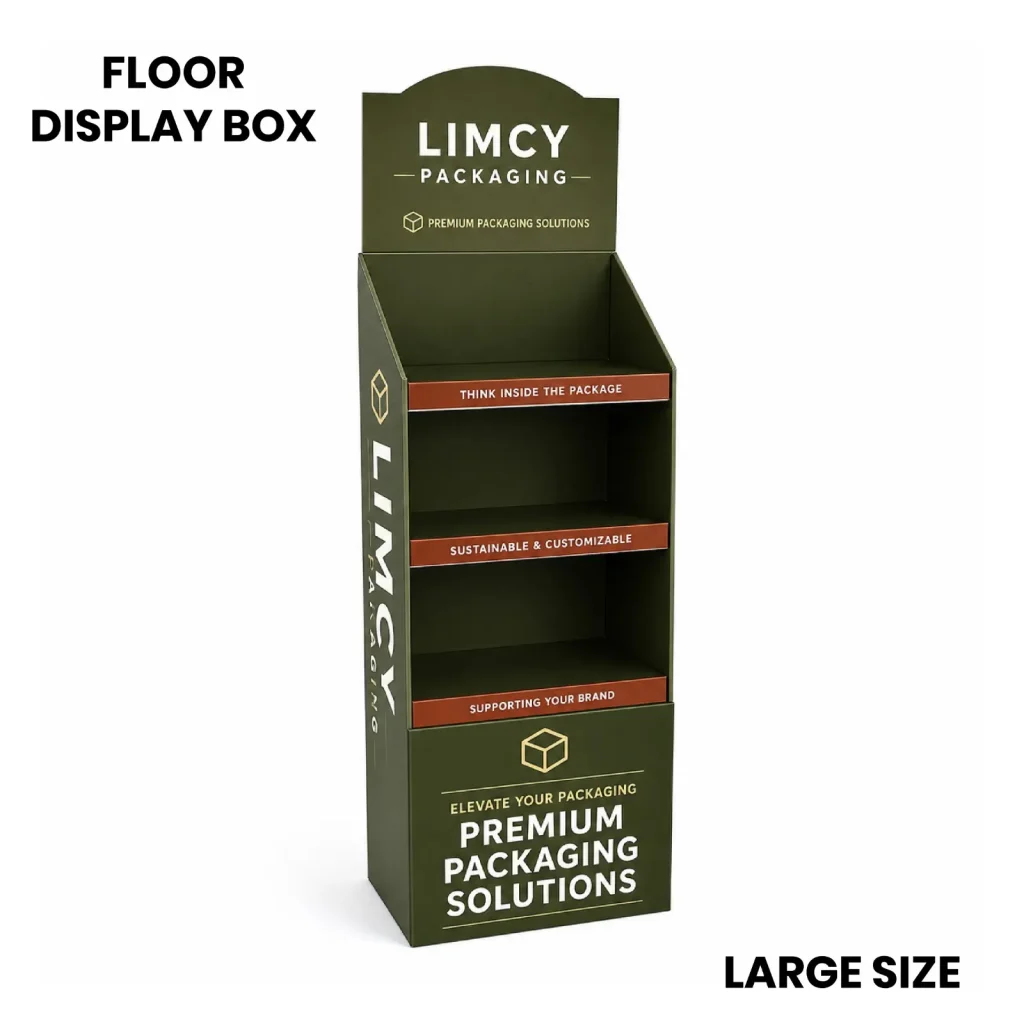
Large and XL floor display sizes work best for higher-volume campaigns, multipacks, and bundled goods. These floor-standing display boxes often carry bulky but lightweight products, seasonal promotions, or pallet displays designed to move a large quantity of inventory quickly. Because they hold more weight and more product, large and XL units need stronger corrugated construction and a wider, more stable base. Safe handling matters here too, since a poorly braced large display can shift or collapse under load.
Small to XL Floor Display Size Comparison
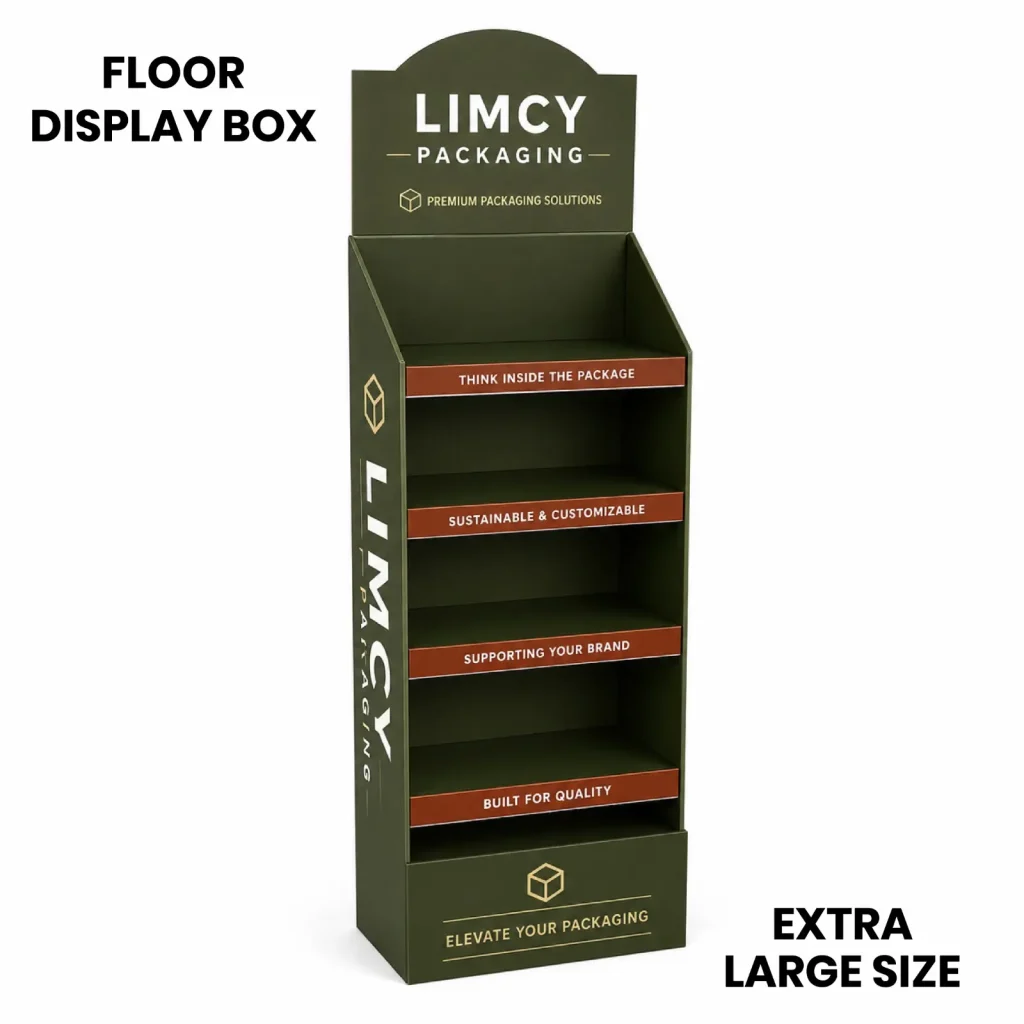
The table below offers a general planning guide, not a universal sizing standard. Actual dimensions always depend on the product, quantity, and retailer requirements.
| Size Category | Suitable Products | Main Design Priorities | Common Retail Use |
| Small | Candy, cosmetics, accessories, snacks, samples | Compact footprint, easy mobility, lightweight build | Checkout areas, entryways, narrow aisles |
| Medium | Personal-care items, boxed goods, beverages | Balanced footprint, multiple shelves, organization | Standard aisle and endcap promotions |
| Large | Multipacks, bundled goods, bulky lightweight items | Stronger base, higher capacity, stability | Seasonal promotions, high-traffic zones |
| XL | Pallet-style loads, high-volume campaign goods | Maximum stability, reinforced construction | Large-scale seasonal or event promotions |
How to Measure a Floor Display Box
Before finalizing any structure, it helps to take accurate measurements, including:
- Product length, width, and height
- Number of units the display needs to hold
- Dividers, inserts, and shelf pitch
- Internal clearance needed on each shelf
- Display width, depth, and total height, including header space
- Floor footprint and aisle clearance for placement
- Shipping and pallet requirements for how the display travels to the store
Custom Floor Display Boxes from Limcy Packaging
Limcy Packaging builds custom display boxes around these exact considerations. Specifically, the company designs custom cardboard and corrugated floor displays, counter displays, and POP displays with shelves, trays, headers, hooks, compartments, dividers, and tear-away sections as needed. Custom printing also helps displays match brand packaging and in-store campaigns. On top of that, Limcy Packaging offers wholesale pricing, low minimum order options, and free shipping within the USA, which makes custom floor display boxes accessible for businesses of different sizes.
Common Floor Display Sizing Mistakes
Several sizing mistakes come up often. For instance, excessive width can block aisles or create safety issues, while insufficient base stability leaves large displays prone to tipping. Similarly, poor shelf spacing makes products hard to see or reach, and weak materials struggle to support product weight over time. Incorrect header height can hide branding, and poor visibility undermines the whole purpose of the display. Above all, skipping a test build before full production remains one of the most common and avoidable mistakes retailers make.
Conclusion
Ultimately, the right floor display box size depends on the product, quantity, available floor space, and the display’s location in the store. Weight, shipping needs, and branding goals matter too. Limcy Packaging works with retailers and brands to plan custom floor display boxes that suit these details. So, if a display is on the horizon, request a quote from Limcy Packaging and start planning sizing that fits both the space and the product.
FAQs
Q1. What is the standard size of a floor display box?
Ans. There is no single standard size. Floor display box sizes vary by product, quantity, and retailer floor space, which is why Small, Medium, Large, and XL are used as general planning categories rather than fixed measurements.
Q2. How tall should a retail floor display be?
Ans. Display height depends on the products being shown and where the display will sit in the store. Most designs aim to keep products within a comfortable shopper reach while allowing space for header branding.
Q3. Can Limcy Packaging create custom floor display boxes?
Ans. Yes. Limcy Packaging designs custom cardboard and corrugated floor displays, including sizing, shelving, and printing tailored to the product and retail space