Why Flexible Packaging Is the Smart Choice Today
The way you package items only touches on what people see when they buy a product. Flexible packaging solutions has changed the game, giving companies new ways to display and protect their items across all different industries. Customers want things to be easy for them to use. Flexible packaging gives brands all that and more at a cost that is sustainable.
The most important aspect is the economics of flexible packaging. Switching from rigid packaging to flexible packaging solutions can save companies up to 70% in packaging materials, significantly enough to save a company money and produce more flexible packaging.
At Limcy Packaging, we make choosing the right flexible pouches for your items simple. Getting that right can impact you more than just monetarily. With pouches, you can lose a lot of shelf space. With these flexible pouches, we break down the most popular pouch types to assist you in your purchasing decision.
1. Zipper Bag
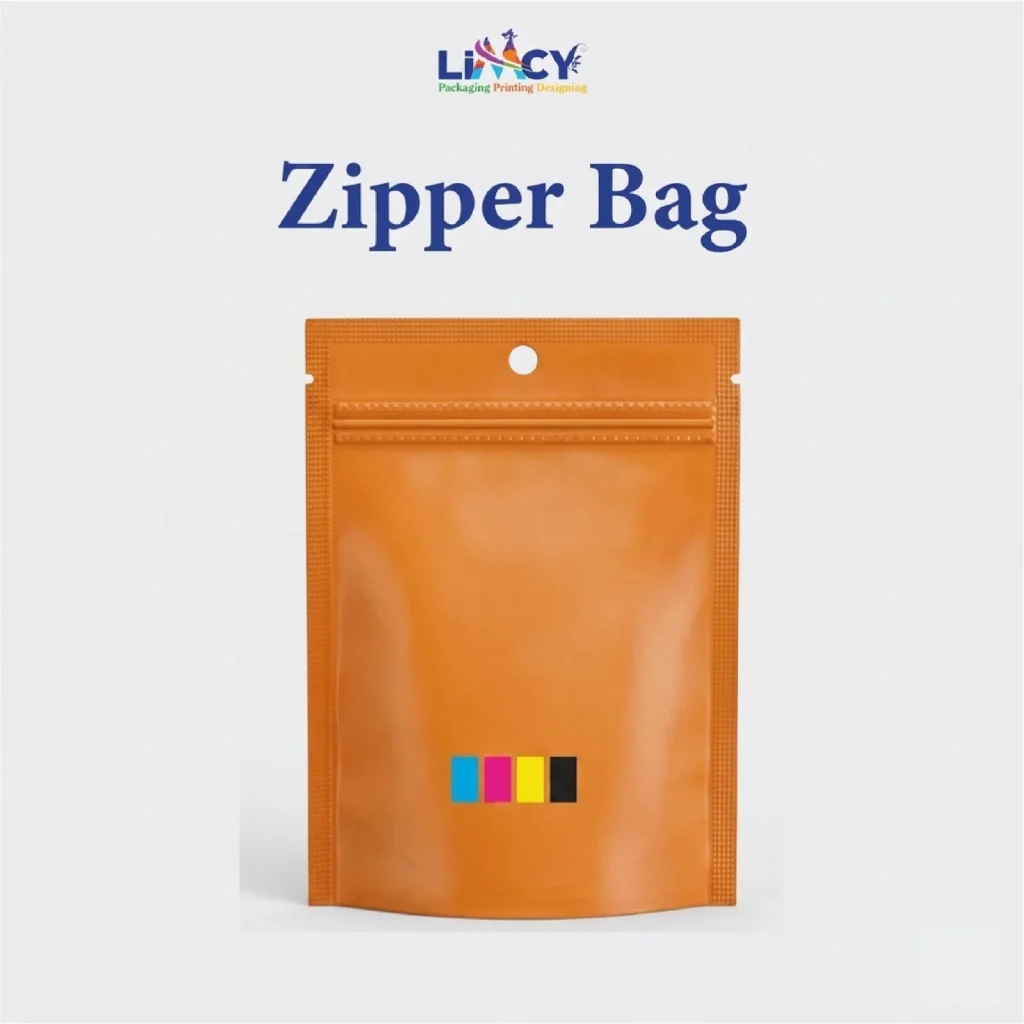
What Is a Zipper Bag?
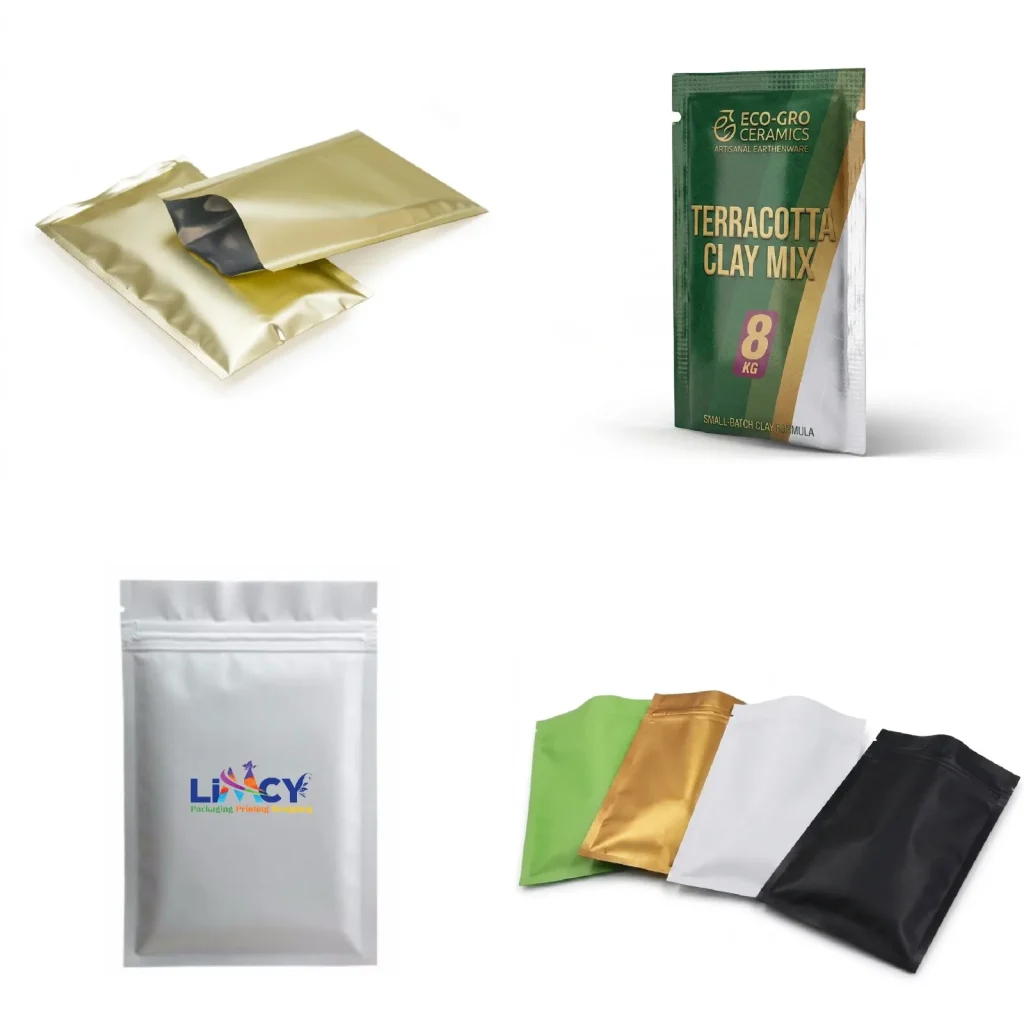
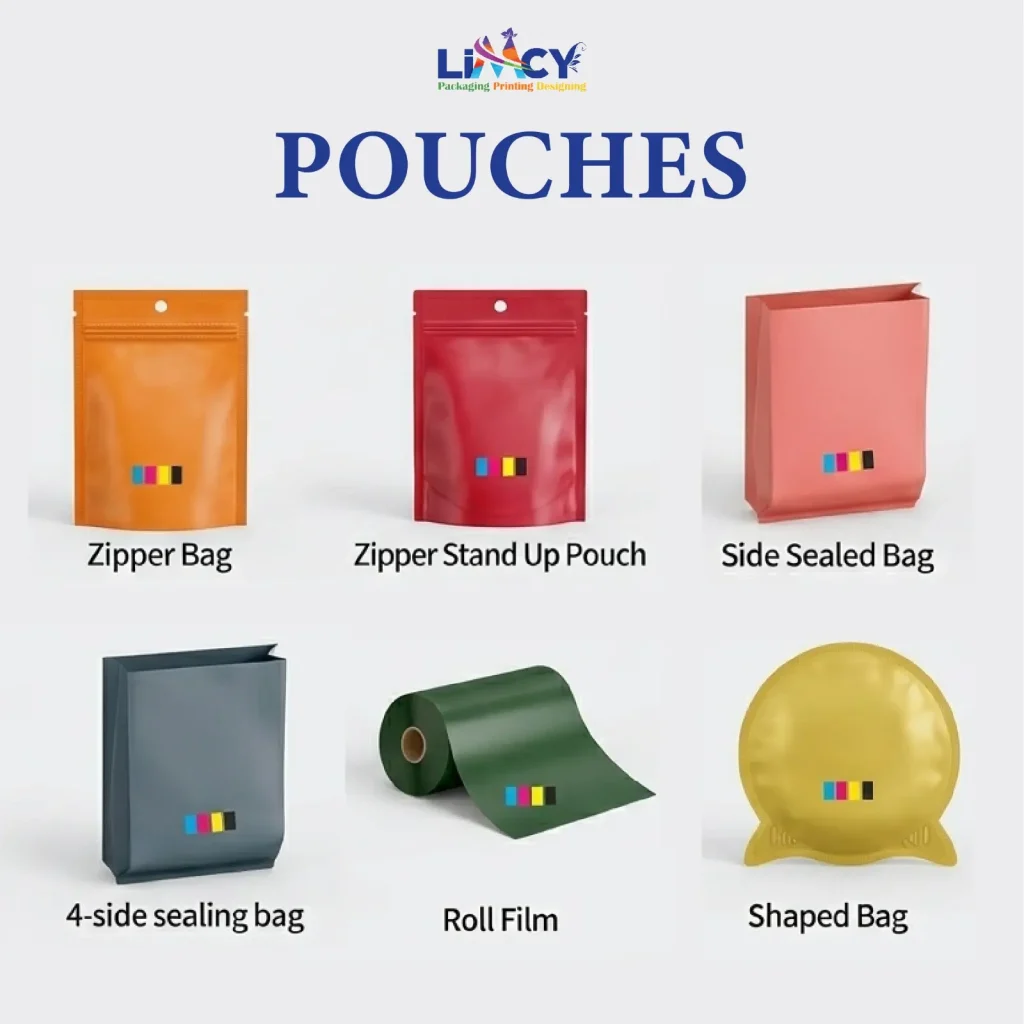
A zipper bag is a flat, flexible bag with a resealable zipper closure running across the top. It’s one of the most recognizable formats in modern flexible packaging—and one of the most practical. The zipper mechanism, whether press-to-close or sliding, creates an airtight barrier that locks freshness in and keeps moisture, dust, and air out. It lies flat naturally and is typically displayed hanging from a hook via a euro-slot punch or placed flat on a shelf. It doesn’t stand on its own when filled, which clearly distinguishes it from the stand-up pouch.
Common Uses and Industries
Zipper bags are genuinely versatile. You’ll find them in almost every product category:
- Food: nuts, dried fruits, trail mixes, candy, jerky, coffee, and spices
- Hardware: screws, bolts, small tools, and electrical components
- Cosmetics: sample sachets, accessories, and travel kits
- Pharmaceuticals: vitamins, herbal supplements, and powder sachets
- E-commerce: tamper-evident product packaging for online orders
If your product is accessed more than once after purchase, a zipper bag should be in serious consideration.
Key Benefits of Zipper Bags
Zipper bags combine cost-efficiency with genuine consumer convenience. The flat structure reduces shipping weight, minimizes storage space, and keeps per-unit costs lean—making them ideal for high-volume operations. Full-color printing on both sides gives your brand plenty of room to communicate, and the resealable closure creates a better experience for the end customer every single time they use the product.
2. Zipper Stand-Up Pouch
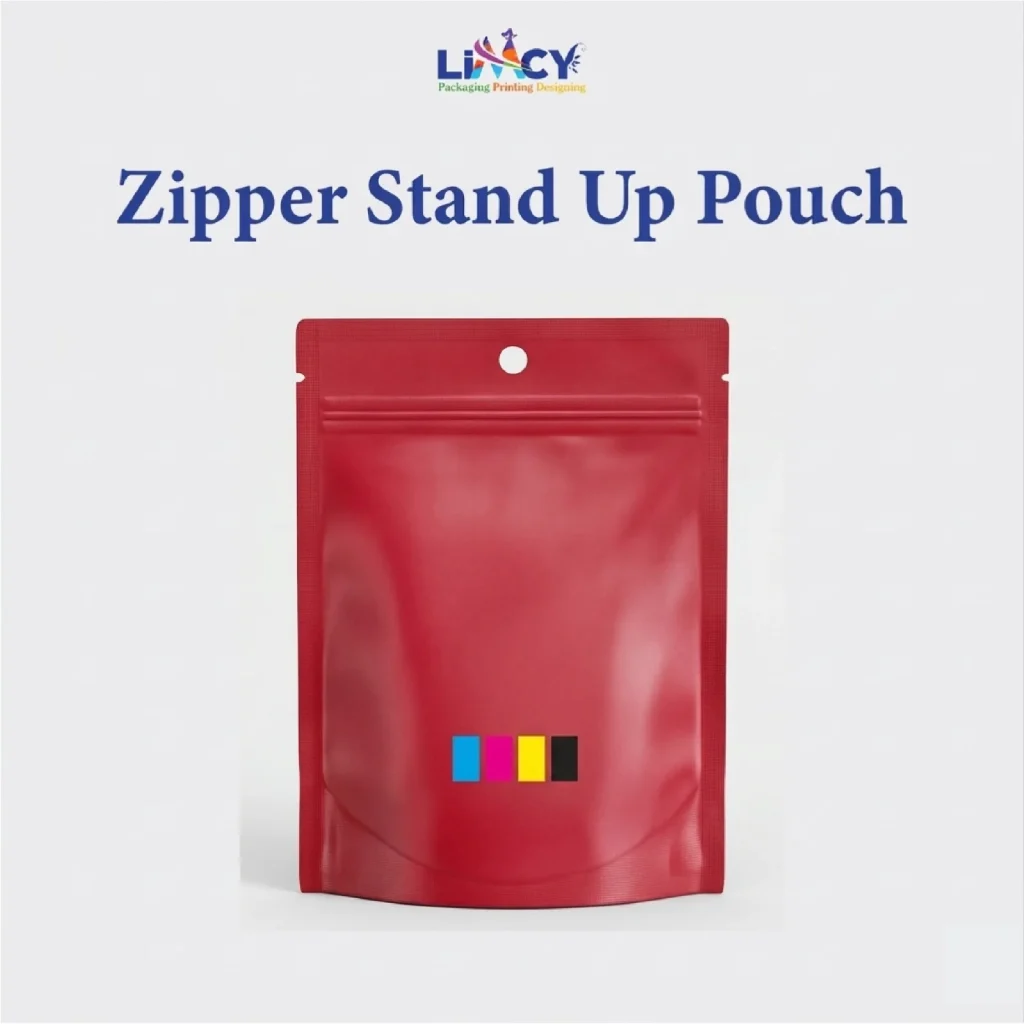
What Is a Zipper Stand-Up Pouch?
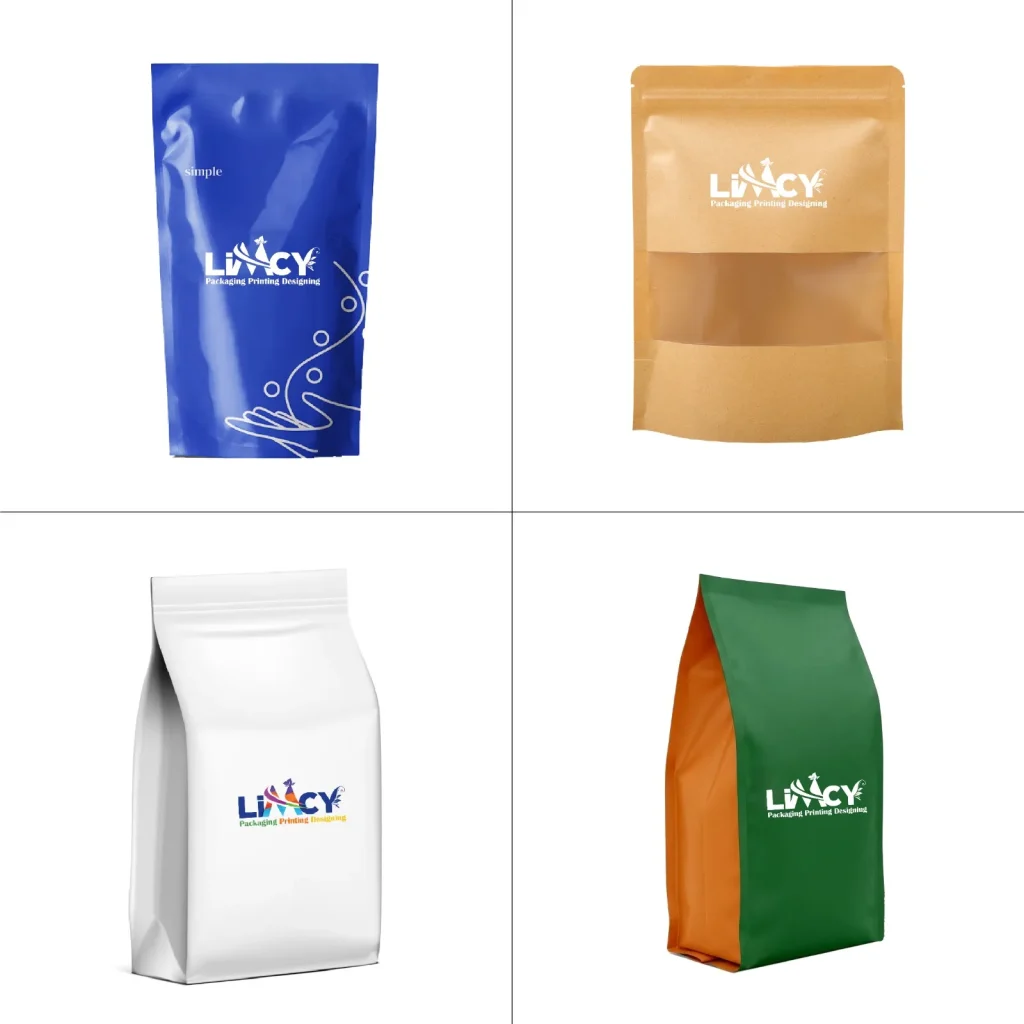
The zipper stand-up pouch is arguably the most powerful format in modern flexible packaging. It combines a gusseted bottom — which allows it to stand upright on a shelf without any support — with a resealable zipper closure at the top. The result is a pouch that looks premium, functions brilliantly, and performs exceptionally well from both a branding and logistics standpoint. The structure typically uses three layers of laminated film: an outer layer for print quality, a middle barrier layer for protection, and an inner food-safe sealing layer.
Where Brands Use It
Stand-up zipper pouches appear across nearly every consumer-facing industry. Here’s where they’re most commonly used:
- Food and snacks: protein powders, coffee, tea, dried fruit, and pet food
- Personal care: bath salts, cosmetic powders, and hair care products
- Pharmaceuticals: vitamins, nutraceuticals, and herbal supplements
- E-commerce brands: any product that benefits from retail-quality shelf presence
- Baby and child products: formula, puffs, and organic snack ranges
Why It Dominates the Flexible Packaging Market
The zipper stand-up pouch in flexible packaging solutions delivers what every brand wants: strong visual shelf presence, functional convenience, and improved supply chain efficiency—all in one format.. It stands on its own at retail, which means it naturally faces the customer without needing a hook or tray. The resealable closure reduces waste for the consumer and extends the perceived value of the product. For small businesses and e-commerce brands especially, this pouch communicates quality before the customer even opens it.
3. Side Sealed Bag
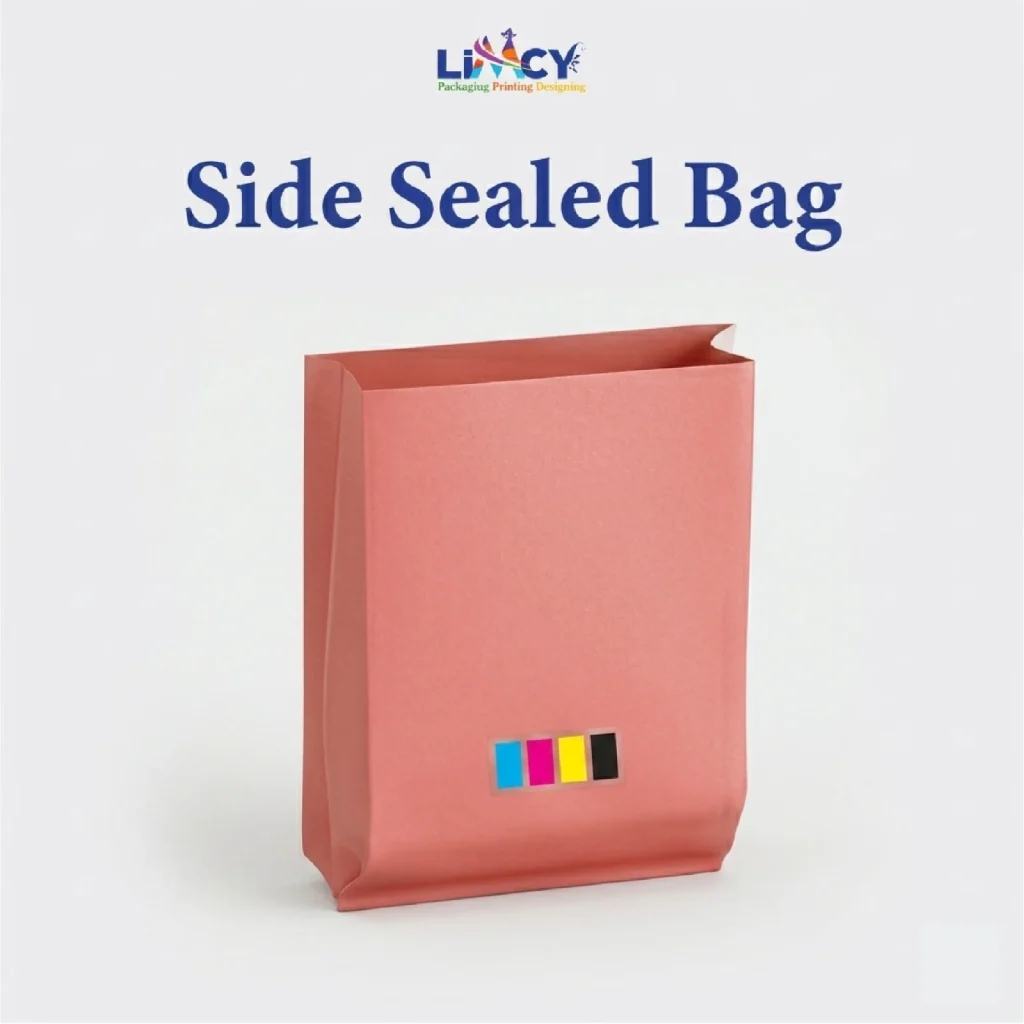
What is a side-sealed bag?
A side-sealed bag is a flat pouch where the seals run along the two vertical sides and the bottom, with the opening at the top. It’s a clean, rectangular format with thin seal strips along its edges, and it lies flat naturally. The structure is straightforward and highly compatible with high-speed automated filling lines, which makes it a favorite for businesses operating at scale. Despite its simplicity, the side seals deliver strong structural integrity—even when the product inside is heavy or dense.
Applications Across Industries
The side-sealed bag in flexible packaging solutions works across a wide variety of sectors. In food, it handles everything from frozen vegetables and bakery items to individually portioned snacks and meat packaging. The pharmaceutical industry relies on it for tablet strips and powder sachets. Agriculture uses it for seeds, fertilizers, and soil additives. Textile and garment businesses use it for folded clothing packaging, while hardware suppliers pack fasteners and components in it daily. Its simplicity is its strength — because the structure is so clean, it can be adapted to almost any size, material, or barrier specification.
Advantages for Businesses
The side-sealed bag’s greatest commercial advantage is its cost efficiency combined with production reliability. Because it uses a straightforward seal configuration with minimal material waste, it consistently delivers one of the lowest per-unit costs in the flexible packaging category. It stacks easily in warehouses, ships flat in bulk, and labels cleanly on both sides. For businesses that need high volumes at predictable costs, the side-sealed bag is a format that rarely disappoints.
4. 4-Side Sealing Bag
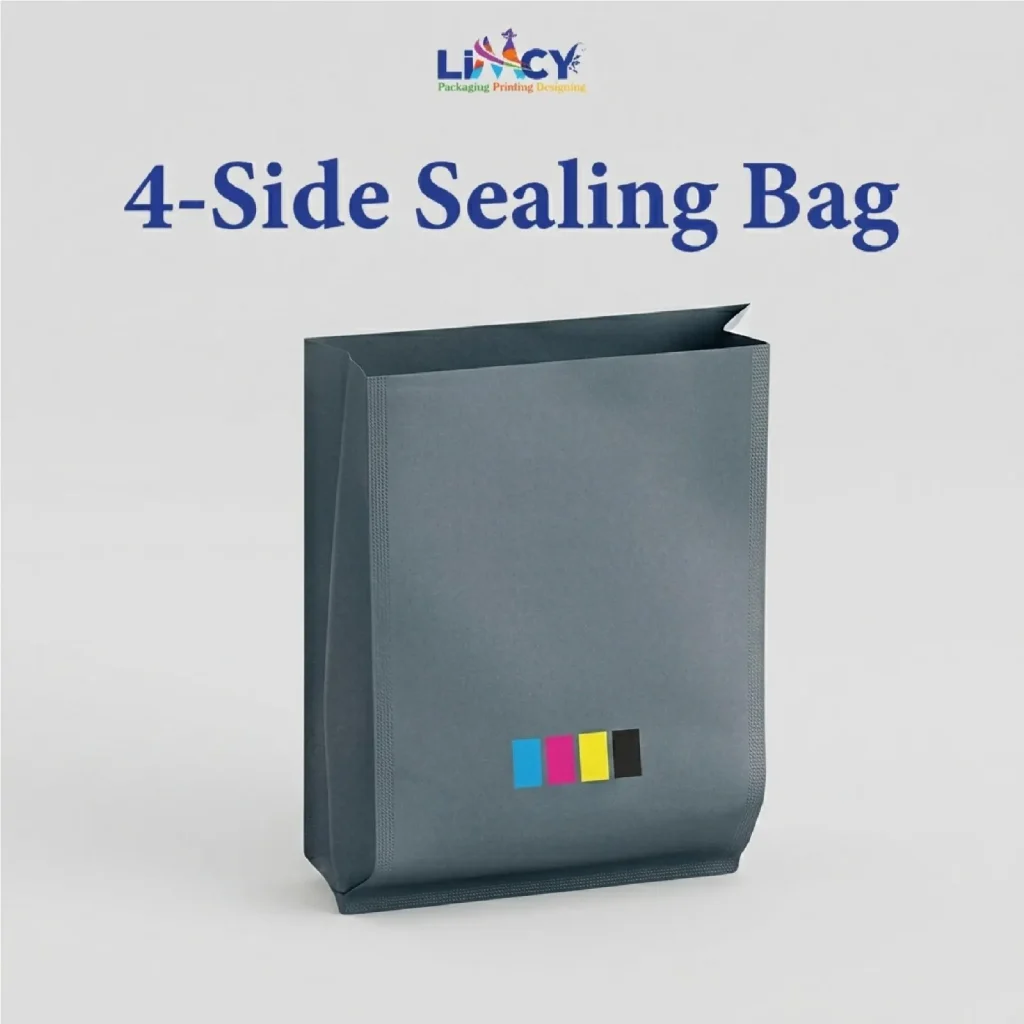
What Is a 4-Side Sealing Bag?
The 4-side sealing bag is sealed on all four sides, creating a completely enclosed, ultra-flat pouch with no open edges. Unlike other bag formats that are filled through the top and then sealed, a 4-side seal bag is fully closed during manufacturing—typically used for single-serve or hermetically sealed applications where total barrier integrity is critical. The result is a sleek, flat, professional-looking package that feels premium in the hand and communicates quality the moment a customer picks it up.
Common Applications
This format is built for precision and protection. Common applications include:
- Food service: single-serve condiment sachets, sugar packets, and individual sauce portions
- Personal care: wet wipes, cosmetic samples, and travel-size skincare products
- Pharmaceuticals: individually wrapped tablets, test strips, and sterile medical supplies
- Beverages: tea bags, instant coffee sachets, and flavour powder sticks
- E-commerce: sample packs and trial-size product launches
Why It’s a Smart Packaging Choice
Because every edge is sealed, there’s no weak point for air, moisture, or contamination to enter—giving you a longer shelf life and a lower spoilage rate. The fully flat surface prints exceptionally well, giving your brand graphics and product information plenty of clean, uninterrupted space. For businesses in regulated industries where tamper evidence and sterility are requirements rather than options, the 4-side seal bag provides the compliance framework you need without sacrificing aesthetics.
5. Roll Film
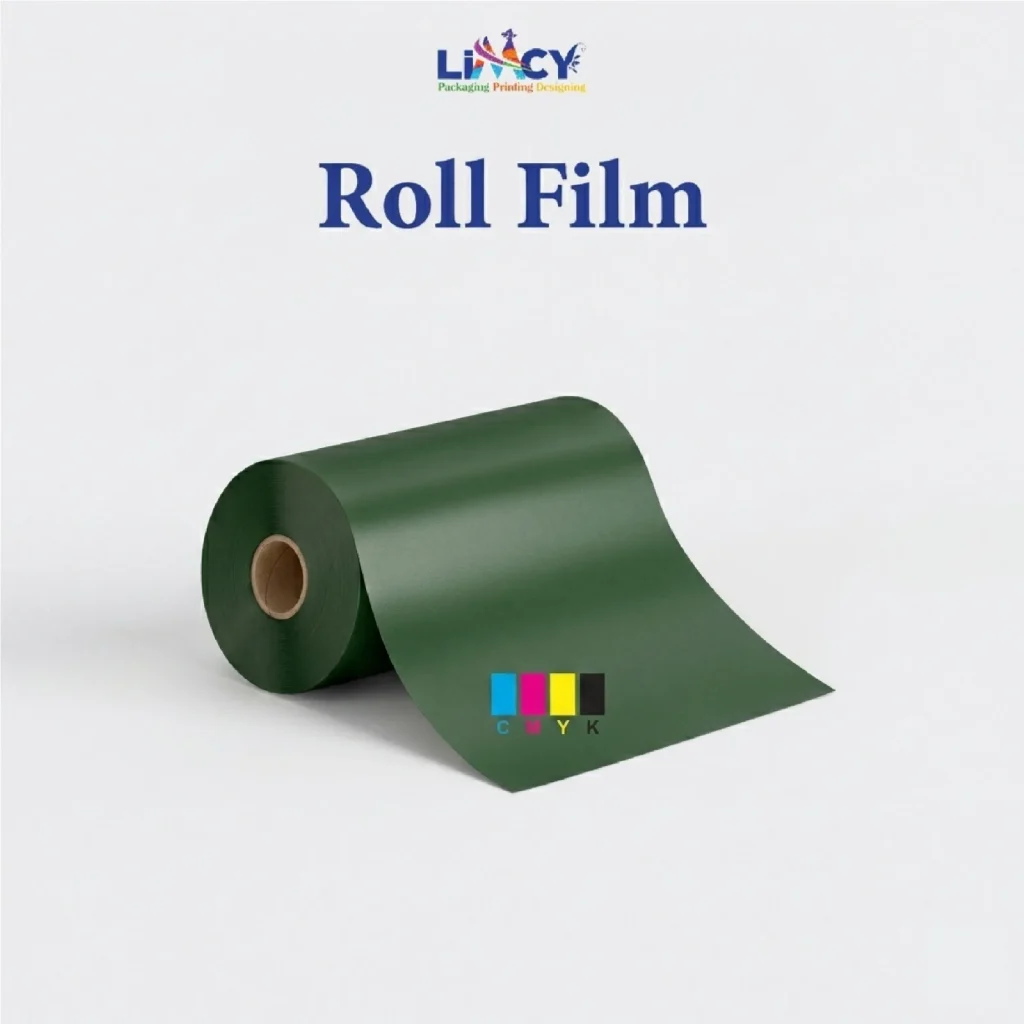
What Is Roll Film?
A roll of film is a flexible sheet of film wound around a cardboard tube. It comes in a roll. It is used with special machines that make pouches, fill them with product, and seal them. This is different from a pouch. The machine does everything in one step. Roll film is a part of making packaging for many consumer goods.
How It Works and Where It’s Used
The FFS machine unrolls the film, forms it into the desired shape, fills it, and seals it in a single high-speed workflow. Roll film can produce flat pouches, stand-up pouches, side gusseted bags, and more—depending entirely on how the machine is configured. It’s central to the packaging of chips, biscuits, pasta, rice, frozen vegetables, confectionery, and bakery products at an industrial scale. Beyond food, it’s used in pharmaceutical blister backing, agricultural wrapping, and textile packaging. If a product is manufactured at high volume, there’s a strong chance roll film is involved in its packaging.
Business Benefits of Roll Film
For businesses operating at volume, the per-unit cost advantage of roll film is difficult to match with any preformed pouch format. Because forming, filling, and sealing happen in one automated step, labor costs drop, output speeds rise dramatically, and material waste is minimised. Roll film also ships and stores more efficiently than pre-made pouches, because rolls take up far less space than bags filled with air. The trade-off is the capital investment in FFS machinery—but for brands at a sufficient production scale, the return on that investment is typically fast and substantial.
6. Shaped Bag
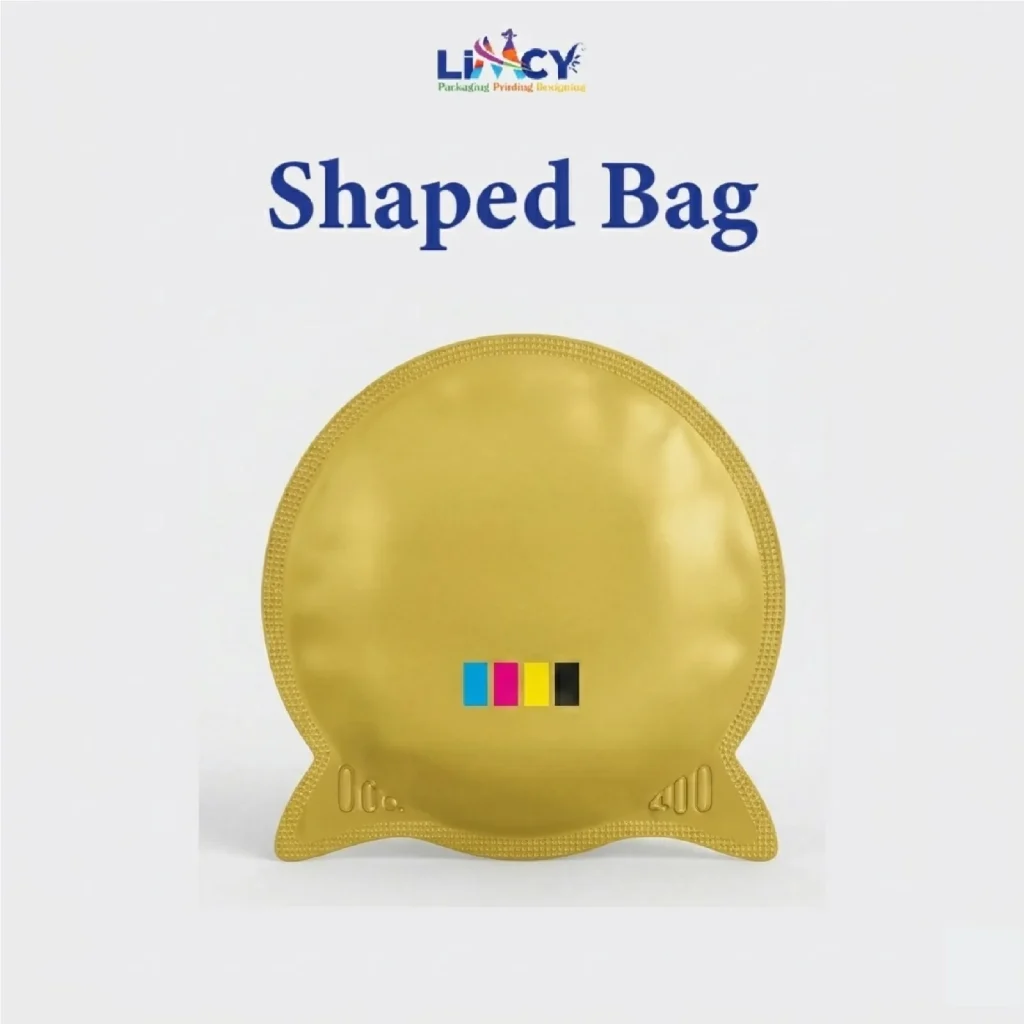
What Is a Shaped Bag?
A shaped bag is a custom flexible pouch that can be cut (shaped) into whatever design the user wishes, besides the normal, boring square or rectangular designs we usually see. These bags can take the shape of a brand (company) logo, characters, or whatever the user prefers, such as a bear, bottle, fruit, etc. To create these, a die cut is added to the laminate manufacturing process. The die-cut edge is what holds the lamination together, and yes, you can still add windows, zips, and spouts as well as maintain the custom shape of the bag.
Creative and Commercial Applications
Shaped bags are enormously popular wherever visual impact drives purchase decisions:
- Confectionery: gummy bear-shaped pouches, chocolate bar silhouettes, and lollipop-shaped packs
- Children’s food and drink: fruit-shaped bags, juice box silhouettes, and character-themed snack packs
- Personal care: gift sets, bath salt pouches, and promotional cosmetic samples
- Seasonal and gifting: festive-shaped packs, event giveaways, and limited-edition product launches
- Hospitality: branded amenity kits and custom merchandise for events
Why Brands Choose Shaped Bags
The primary reason brands invest in shaped bags is differentiation within flexible packaging solutions. In a market where competitors often use similar rectangular pouches, a shaped bag becomes a strong brand asset that stands out visually and creates an immediate connection between the package design and the brand identity. This kind of packaging equity supports long-term customer recognition and brand recall. Although shaped bags may have a slightly higher per-unit cost due to the die-cutting process, their value in marketing impact, social media shareability, and perceived product quality often outweighs the investment for brands focused on strong market positioning.
Pouch Type Comparison: Which One Is Right for You?
| Pouch Type | Stands Upright | Resealable | Best For | Production Method |
| Zipper Bag | No | Yes | Snacks, hardware, cosmetics | Pre-made |
| Zipper Stand Up Pouch | Yes | Yes | Retail food, supplements, pet food | Pre-made |
| Side-Sealed Bag | No | Optional | Frozen food, bulk goods, pharma | Pre-made |
| 4-Side Sealing Bag | No | No | Sachets, samples, medical items | Pre-made |
| Roll Film | Depends on FFS | Depends | High-volume automated lines | Roll / FFS machine |
| Shaped Bag | Optional | Optional | Confectionery, gifts, branding | Pre-made and die-cut |
Conclusion
Choosing the right flexible pouch type is a strategic decision that directly impacts your brand perception, supply chain efficiency, product shelf life, and overall bottom line. These flexible packaging solutions include formats such as zipper bags, stand-up pouches, side-sealed bags, 4-side sealing bags, roll film, and shaped bags, each designed to solve specific packaging challenges and fit different business needs.
The right pouch, paired with the right material and print strategy, can genuinely transform how your customers experience your brand from the very first point of contact. At Limcy Packaging, our team is ready to help you make that match—whether you’re ordering your first batch or scaling an existing product line to meet growing demand. Get a custom quote for the right pouch style today