
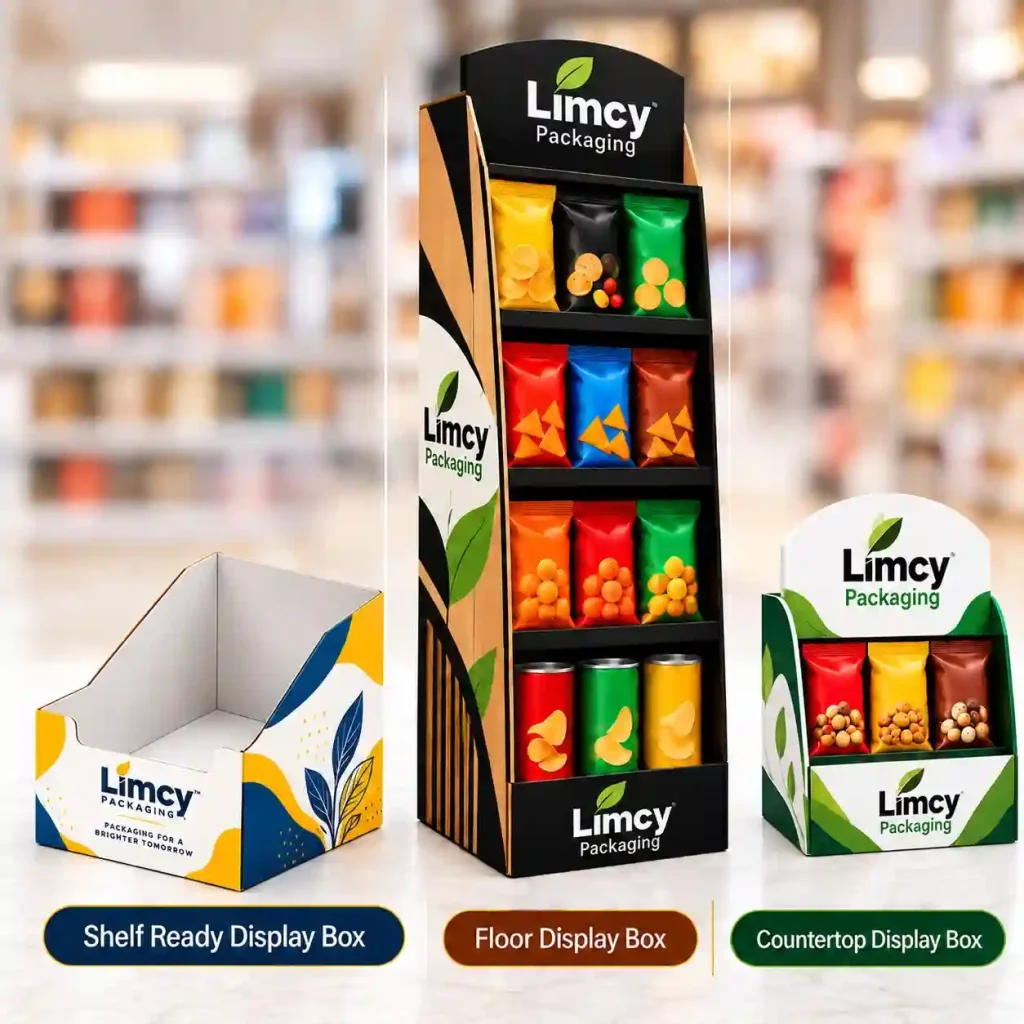
Get PDQ display sizes wrong, and the problems show up fast. The unit crowds the shelf, hides the product, or runs empty by midweek. Get them right, and it fits, reads clearly, and stays stocked. That is why sizing belongs at the start of a project, before artwork or pricing.
Size shapes shipping, capacity, and customer access too. A tray that fits the pallet but not the shelf still fails. Here’s how retail display dimensions work, how to measure for them, and where buyers usually slip.
Are PDQ Display Sizes Standard?
A PDQ display arrives pre-packed, so store teams can move it from case to shelf, counter, or floor in minutes.
Still, no universal size exists. Real dimensions depend on the product, its weight, the quantity, the display location, the shipping method, and retailer rules. Some retailers also limit certain formats, so confirm requirements before production starts.
Size labels like Small, Medium, Large, and XL help with early planning, nothing more. They aren’t industry standards. Final custom PDQ display dimensions come from measuring the packaged item and the fixture it has to fit. The table below shows example ranges to get you started.
| Display type | Planning size range or example | Typical retail placement | Main sizing priority |
| Small countertop display | Compact footprint, often under 12 inches wide | Checkout counters and service desks | Limited counter space |
| Medium countertop display | Approximately 12–18 inches wide | Cash wraps and pharmacy counters | Product visibility and customer reach |
| Shelf-ready PDQ tray | Sized to match shelf width and depth | Retail shelves and endcaps | Shelf fit and product facings |
| Shipper display | Custom internal tray plus outer shipping case | Direct-to-shelf placement | Product protection and quick opening |
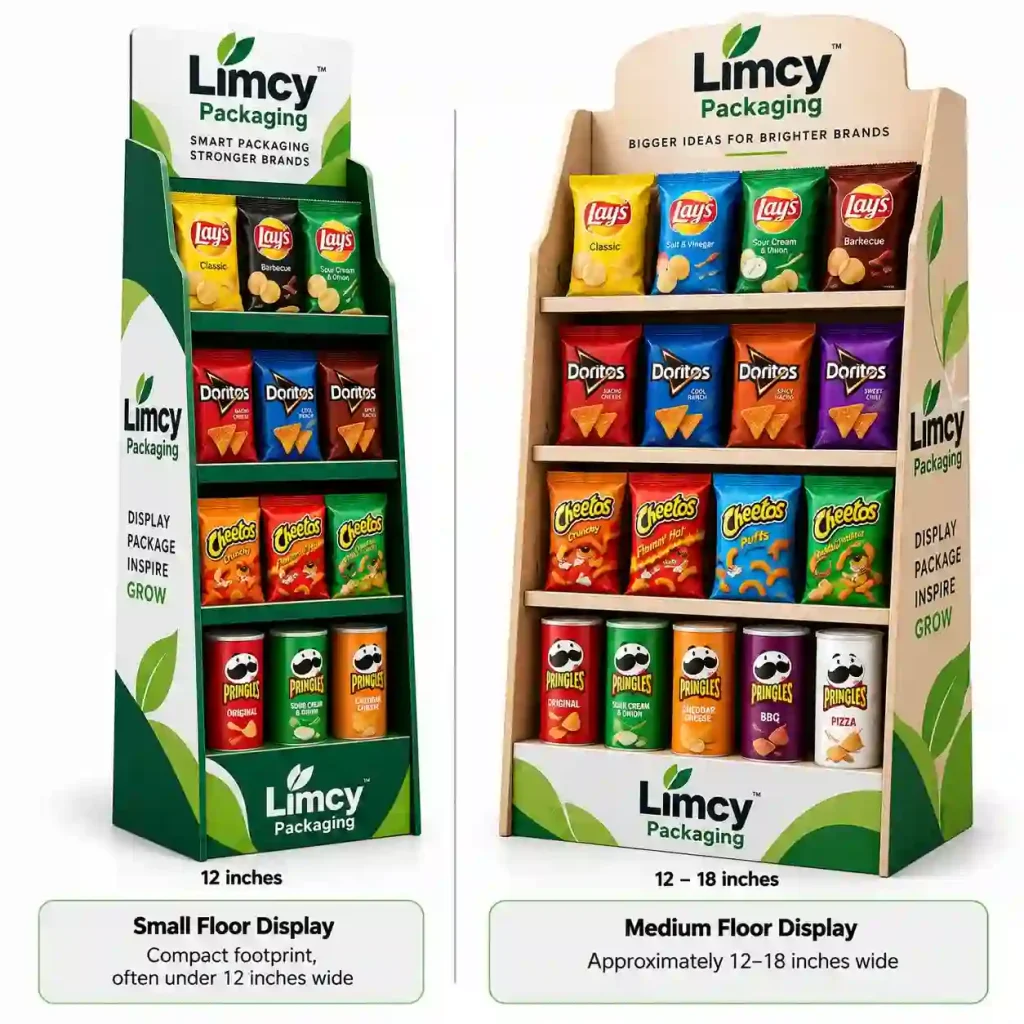
| Small floor display | Approximately 15–18 inches wide and deep | Aisles and promotional areas | Stability and compact footprint |
| Medium floor display | Approximately 18–24 inches wide and deep | Retail floors and seasonal zones | Capacity and aisle clearance |
| Large floor display | Custom larger footprint | Endcaps and high-volume campaigns | Structural strength and visibility |
| Pallet display | Retailer or pallet-specific footprint | Club stores and large-format retail | Pallet fit, height, and load capacity |
These figures are planning examples, not universal industry standards. Final PDQ display dimensions depend on the product, retail fixture, retailer requirements, materials, shipping method, and display purpose.
Countertop PDQ Display Sizes
Countertop PDQ display sizes start with the counter itself. Checkout lanes, cash wraps, pharmacy counters, service desks, and reception areas all give you different footprints. Space is usually tight, so most displays stay compact and grow taller instead.
Height needs a sanity check, though. Shoppers should reach items without stretching across the counter. Header clearance matters as well, because a tall header can hide signage or screens. In addition, leave room for staff to scan and bag.
Shelf-Ready PDQ Tray Dimensions
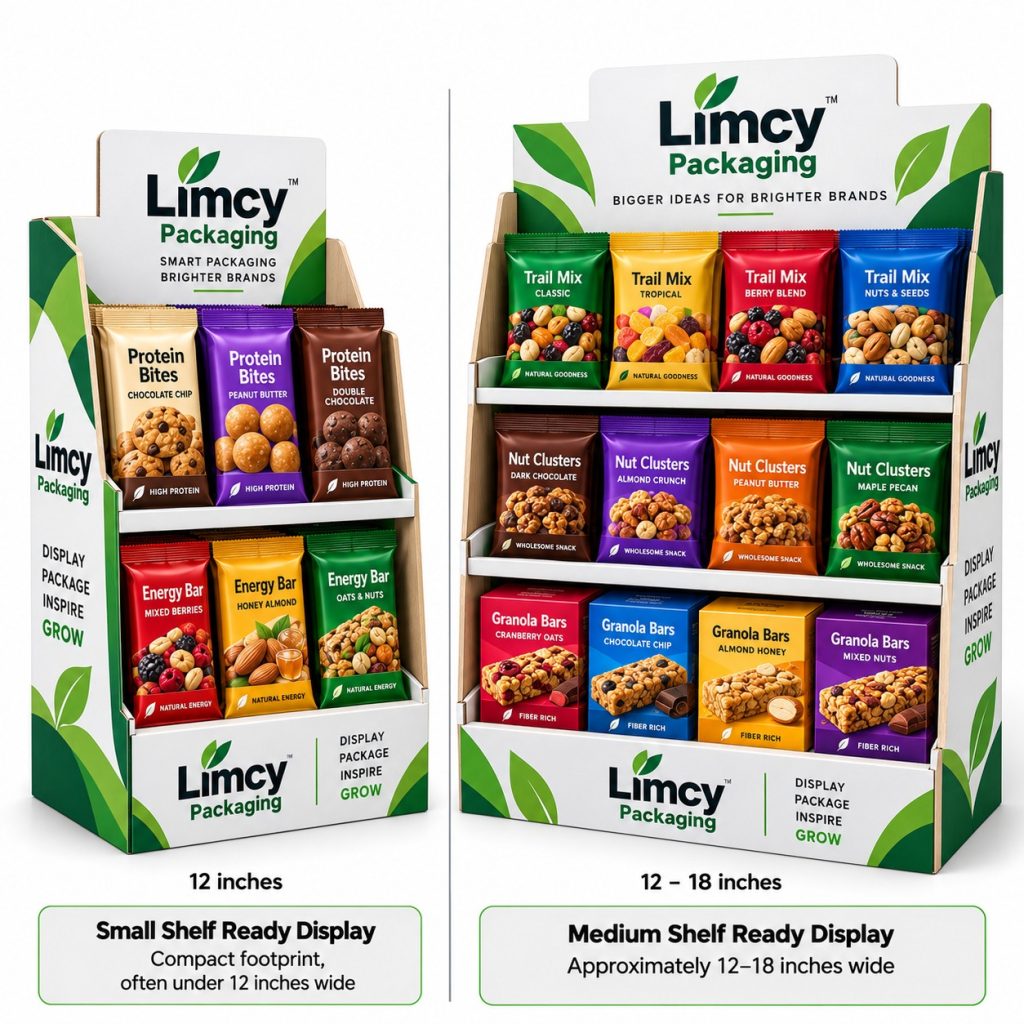
A shelf-ready tray has to match the shelf’s width, depth, and height. Brackets, shelf lips, and the gap above the tray all eat into usable space. Facings decide how many lanes fit, and dividers keep those lanes tidy. An open front or tear-away edge makes restocking easy.
Take a simple example. Say a shelf is 36 inches wide with 2 inches of clearance above. Each package measures 3 inches wide, 2 inches deep, and 5 inches tall. Twelve facings would fill all 36 inches and leave no room for walls. Ten facings leave 6 inches for dividers and tolerance, which works far better.
Floor, Endcap, and Pallet Display Sizes
Floor displays stand on their own, so footprint and stability come first. Taller units need wider bases, and heavy products call for stronger boards. Small and medium units follow the ranges above, while large units usually need a custom footprint.
Endcaps must fit the fixture and keep the aisle open. Pallet displays follow pallet-specific footprints, and half or quarter pallet formats vary by store. Height limits and load rules differ too. For small items, a hanging display works, but peg spacing and hook length set its dimensions.
Shipper Display Dimensions
A shipper display does two jobs: it protects the product in transit and presents it in the store. That means the internal display space and the external shipping dimensions have to work together. The outer case must protect the product, stack well, and hold the right case-pack quantity.
Tear-away panels open quickly, but they shouldn’t weaken the case during shipping. Extra protection adds thickness, and thickness shrinks the space inside. As a result, plan for that early.
How to Measure for a Custom PDQ Display
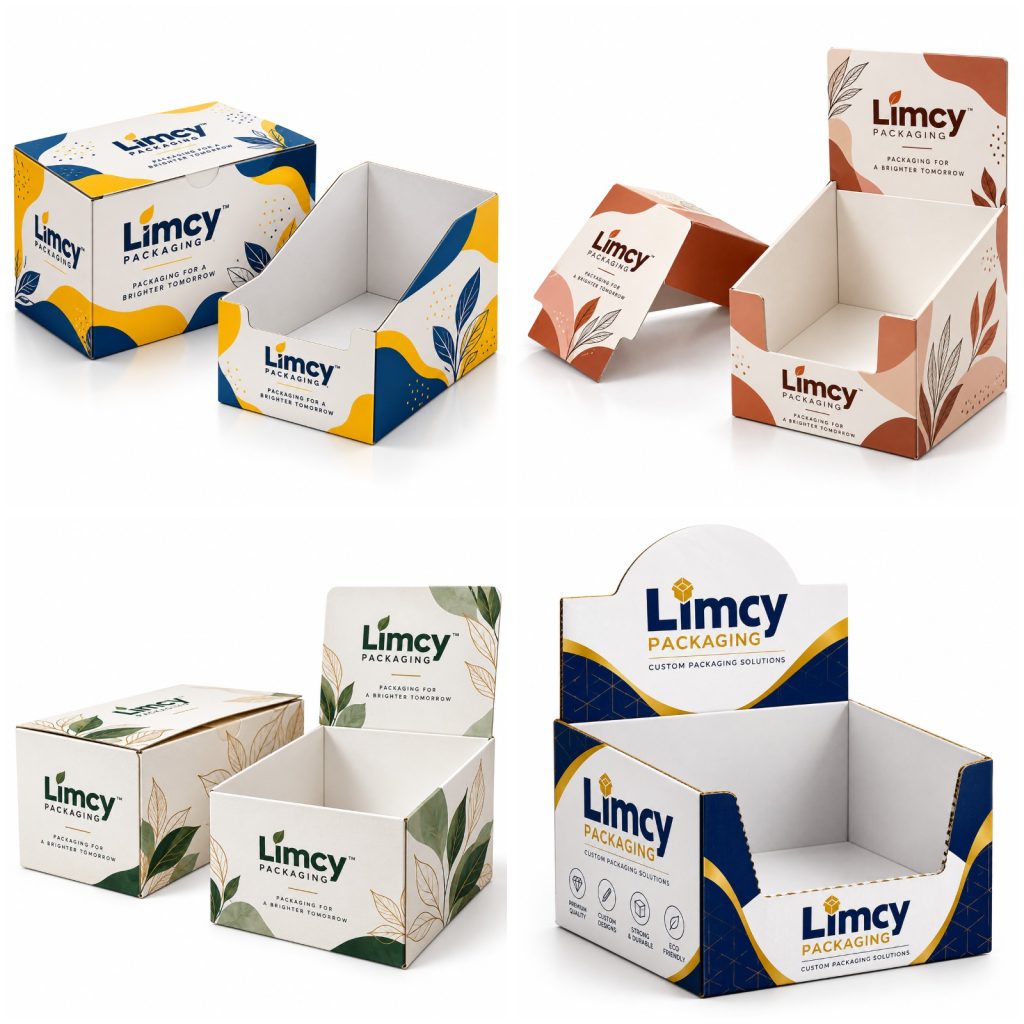
Start with the packaged product, not the product alone. Then work through these steps:
- Measure the packaged product’s length, width, and height.
- Confirm product weight.
- Decide product quantity and facings.
- Measure the shelf, counter, or floor space.
- Allow space for board thickness, dividers, headers, and product access.
- Test the design with a sample or dieline.
A dieline lays every fold and panel out flat, so mistakes show up before production. A physical sample then confirms fit, stability, and access.
Common PDQ Display Sizing Mistakes
Copying a competitor’s dimensions is a classic error, since their products and fixtures differ from yours. Some buyers measure the product but forget its retail packaging. Others overlook board thickness, which adds up across dividers. Overloaded trays bow, and oversized headers block shelves. Finally, skipping a prototype hides problems until store setup.
Custom PDQ Display Sizes from Limcy Packaging
Limcy Packaging is a US-focused custom packaging and printing company. The team helps brands develop custom retail display boxes based on product dimensions, quantity, display location, material, branding, and shipping needs. Custom sizing support guides each project.
The company works with cardboard and corrugated materials. Projects include counter displays, floor displays, and shelf-ready packaging, plus inserts, dividers, and headers. For reference, review these countertop display box sizes and shelf-ready packaging box sizes before requesting a quote.
Conclusion
PDQ display sizes depend on the product, location, quantity, retailer, material, and shipping requirements. Planning ranges offer a starting point, but measurements and prototypes set final dimensions. Contact Limcy Packaging today for a custom sizing consultation on your next PDQ display. Send your product dimensions, target quantity, and display location to request a quote.
FAQs
Q1. Are there standard PDQ display sizes?
Ans. No. Sizes vary by product, weight, quantity, location, shipping method, and retailer rules. Small, medium, and large are for planning labels only.
Q2. How do I size a shelf-ready PDQ tray?
Ans. Measure the shelf’s width, depth, and height. Subtract space for brackets, shelf lips, and clearance above. Then allow for facings, dividers, and board thickness, and confirm the fit with a dieline or sample.
Q3. What should I send for a custom PDQ display quote?
Ans. Send the packaged product’s dimensions and weight, quantity, facings, and the shelf, counter, or floor measurements. Add the shipping method and any retailer requirements.