
Good food can fail in the last mile. Food delivery packaging protects meals in transit, holds temperature, prevents spills, supports food safety, and shows off your brand. Restaurants, cloud kitchens, food trucks, cafés, bakeries, and meal-prep businesses face the same test: the order must arrive looking as good as it left your kitchen.
A crushed box or a soggy burger costs you a review and a repeat order. Strong restaurant delivery packaging protects both the food and your reputation.
Keep Takeout Orders Fresh During Delivery
Freshness starts with the right mix of containers, lids, and bags. Insulated food delivery bags slow heat and cold transfer. Secure lids keep each dish in place. Fast dispatch matters just as much, because even the best packaging can’t save food that sits on the counter.
Results always depend on food type, lid fit, insulation, transport time, and handling.
Keep Hot Food Hot
Double-wall containers add a layer of insulation. Tight-fitting lids reduce heat loss. Place hot containers inside insulated bags and close the bag right after packing. Avoid overpacking, which crowds lids and traps steam.
Keep Cold Food Cold
Pack cold items separately from hot meals. Insulated sleeves protect salads and desserts. Secure lids keep warm air from spilling out. Never place cold items beside a hot container, because heat moves quickly inside a closed bag.
Keep Fried Food Crispy
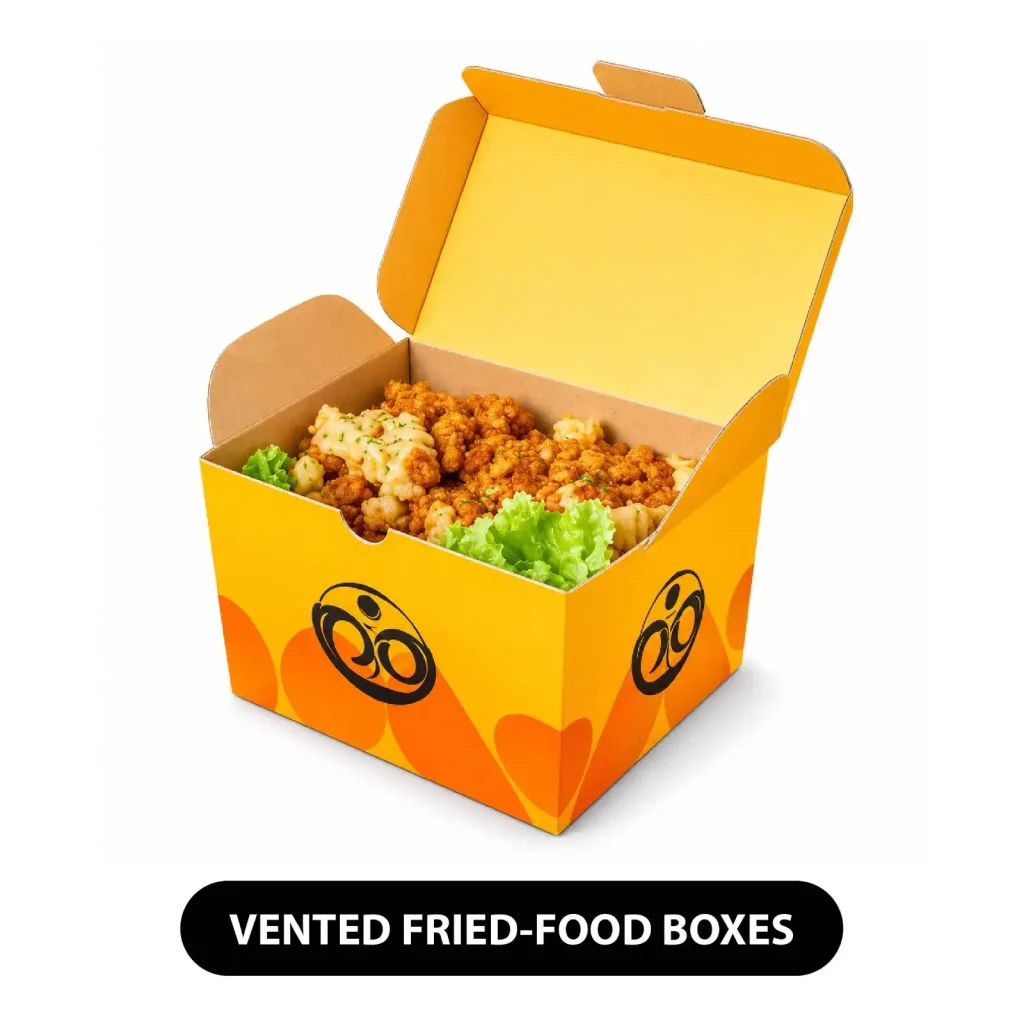
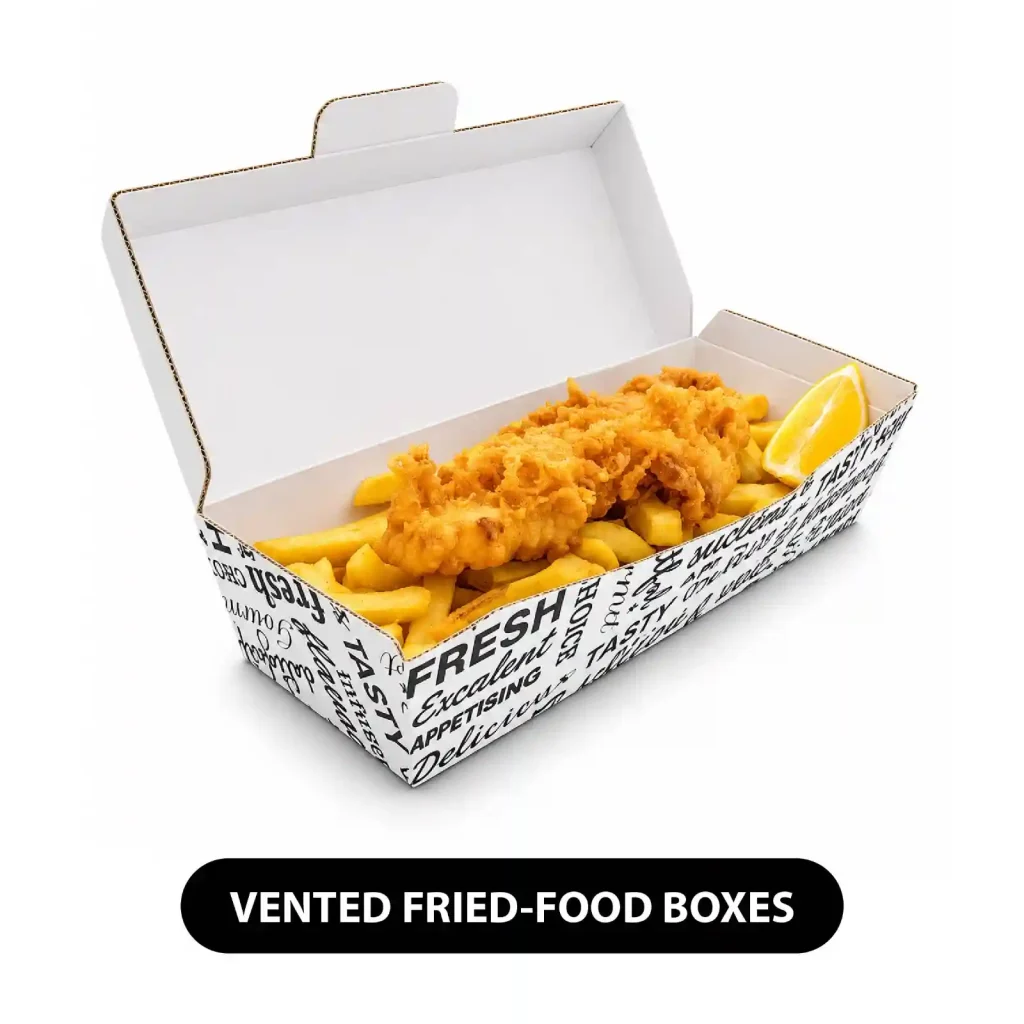
Fried food needs to breathe. Vented food containers let steam escape, and absorbent liners control moisture. Sealed airtight packaging traps steam and softens the coating. Pack sauces on the side.
Protect Food Safety With Tamper-Evident Packaging
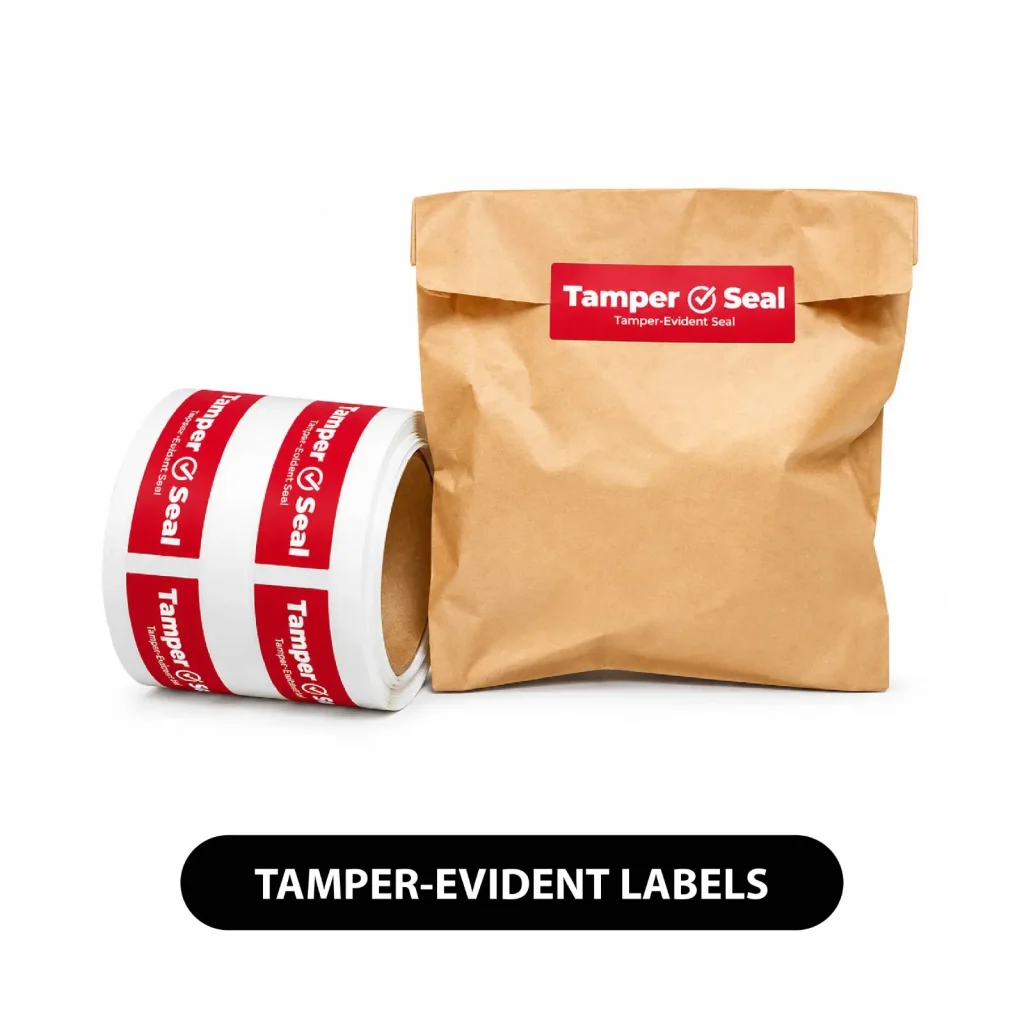
Tamper-evident food packaging shows customers that nobody touched their order. Tamper-evident labels and security seals show visible damage if someone opens or disturbs a package. Sealed delivery bags add a second checkpoint.
These tools reduce risk, but they do not make a package completely tamper-proof. Place labels across bag openings so tampering shows.
Prevent Leaks, Spills, and Soggy Food
Spills can ruin an order faster than a late driver. Leak-proof food containers with secure lids lower the risk, but no container is perfect. Performance depends on lid fit, coating, food type, and handling.
Pack sauces and dressings in separate sauce cups. Add grease-resistant liners under oily foods. Place flat, stable containers level in the bag, because less movement means fewer spills.
Food Delivery Packaging Comparison
| Packaging Solution | Best For | Key Benefit | Consideration |
| Insulated delivery bags | Hot meals, mixed orders | Slow heat and cold transfer | Results vary by transit time. |
| Clamshell containers | Burgers, sandwiches, entrées | Easy to close and stack | Poor fit for liquid-heavy dishes |
| Leak-resistant bowls | Soups, curries, noodles | Secure lids hold liquids. | The lid must match the bowl size |
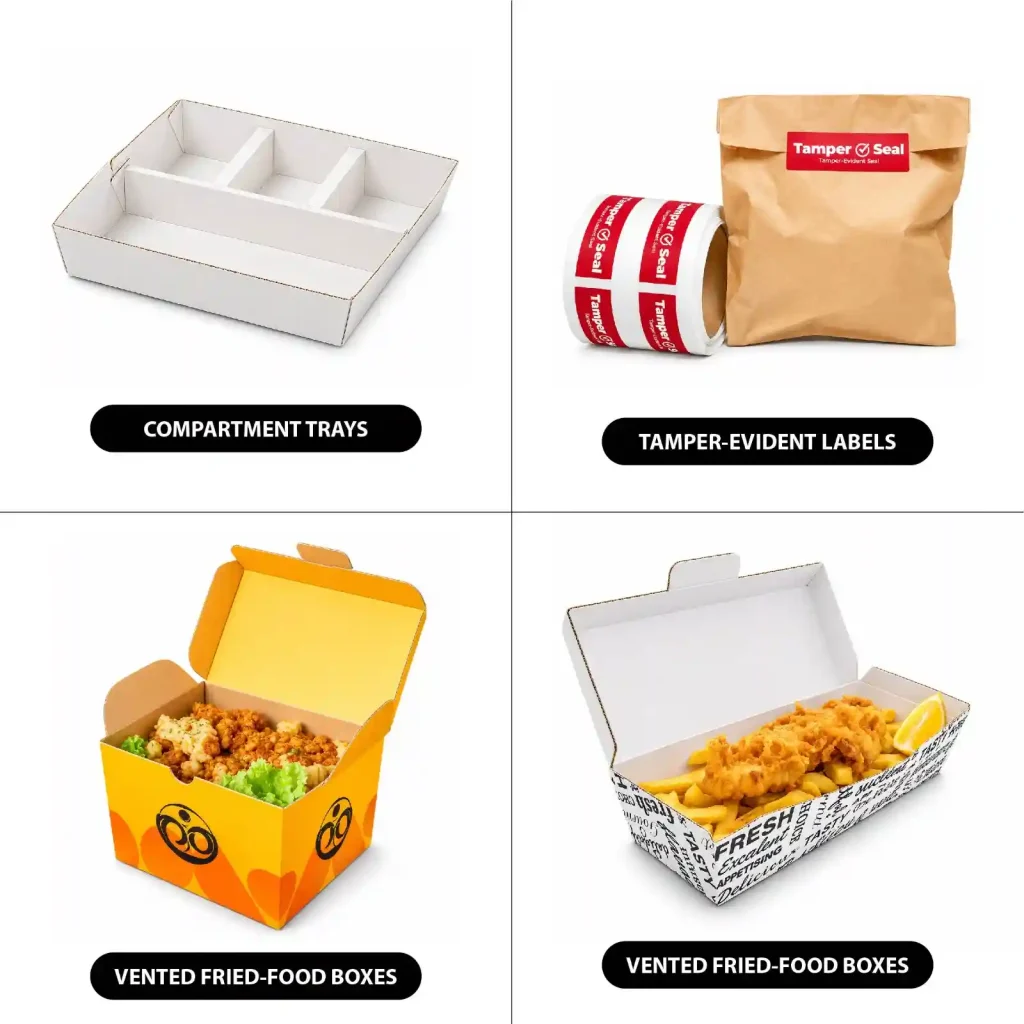
| Vented fried-food boxes | Fries, wings, chicken | Steam escapes, and the coating stays crispier | Less insulation than sealed boxes |
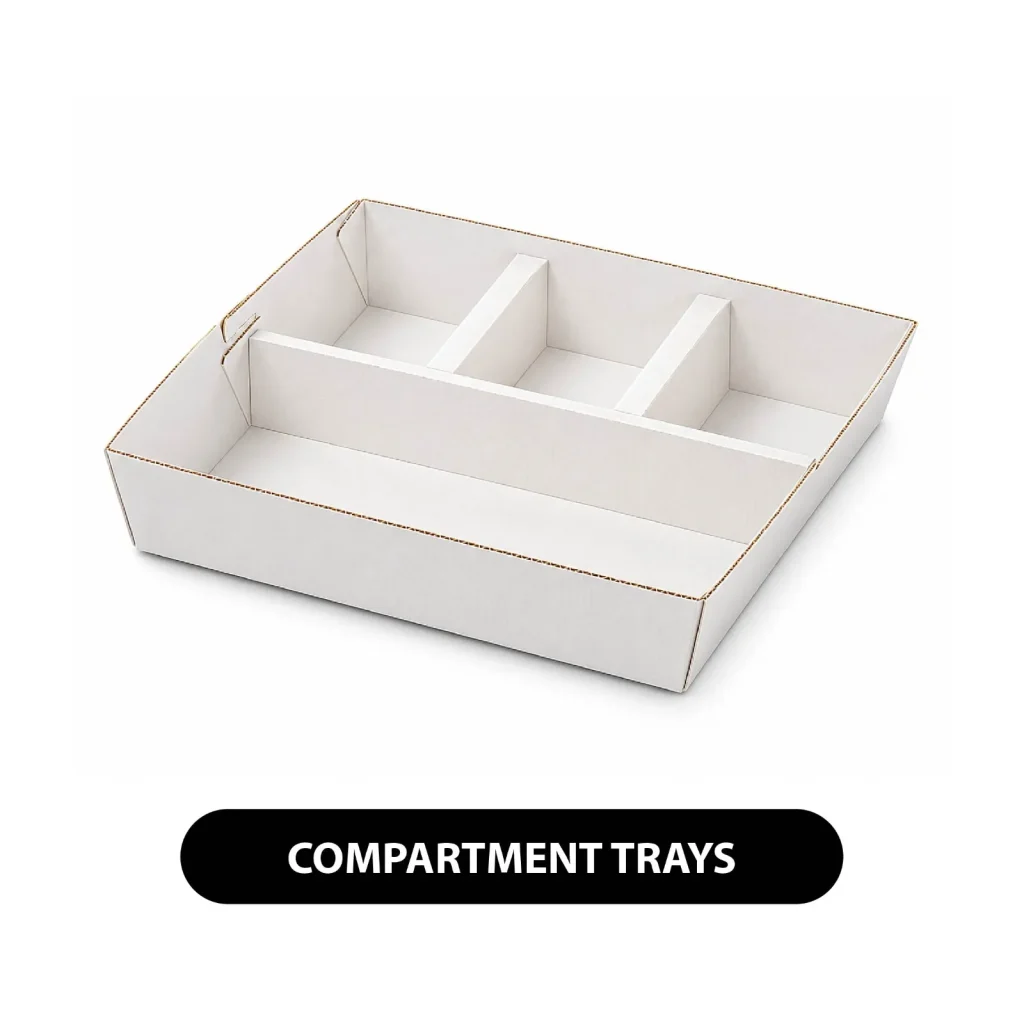
| Compartment trays | Combo meals, meal prep | Keeps foods apart | Fixed layouts limit flexibility |
| Tamper-evident labels | Sealed orders | Shows if a package was opened | Deters but does not prevent tampering |
Most businesses need custom restaurant packaging that combines containers, bags, and labels.
How to Pack Delivery Orders Correctly
Pack hot and cold items separately. Seal sauces before they go in the bag. Use sturdy bags and place heavier containers at the bottom. Add reheating instructions for meals customers may eat later. Check every order against the ticket before sealing.
- Separate hot, cold, and fried items.
- Close every lid and sauce cup.
- Put heavy containers at the bottom.
- Add napkins, utensils, and reheating notes.
- Match items to the order ticket.
- Apply a tamper-evident label.
Brand Your Food Delivery Packaging
Branded packaging turns every delivery into a customer touchpoint. Custom food packaging can include printed boxes, branded bags, and logo stickers. Add your social media handles so happy customers can tag you.
QR code stickers can link to your menu, a reorder page, or a loyalty offer. Branded food delivery packaging gives customers a reason to order direct next time.
Eco-Friendly Food Delivery Packaging Options
Eco-friendly delivery packaging can influence orders. A UK survey by Takeaway Packaging found that over 68% of respondents would be more likely to order from a takeaway using recycled packaging.
Kraft paper, recycled paperboard, bagasse, and molded fiber are common choices. PLA-coated packaging adds moisture resistance to paper. Compostable delivery packaging is available in several of these materials.
Compostability depends on the material, coating, and local composting facilities. The same survey found 70% of respondents were more likely to choose providers that explain disposal. Print clear recycling or composting instructions on labels. Check what your area accepts before you label anything compostable.
Upgrade Your Food Delivery Packaging with Limcy Packaging
Choose packaging based on your menu, delivery distance, food temperature, and branding goals. Test samples on real deliveries. Contact Limcy Packaging to request custom sizes, material recommendations, samples, wholesale pricing, and branded food delivery packaging.
FAQs
Q1. What is food delivery packaging?
Ans. It covers the containers, bags, liners, and labels that carry meals to customers.
Q2. How do I keep food hot during delivery?
Ans. Use double-wall containers with tight lids inside insulated bags, and dispatch quickly.
Q3. Are tamper-evident labels necessary for food delivery?
Ans. Requirements vary by location, but many businesses use them. They show visible signs of opening and build customer trust.
Q4. What is the best packaging for fried food delivery?
Ans. Vented containers with absorbent liners work best. They release steam and help limit sogginess.