
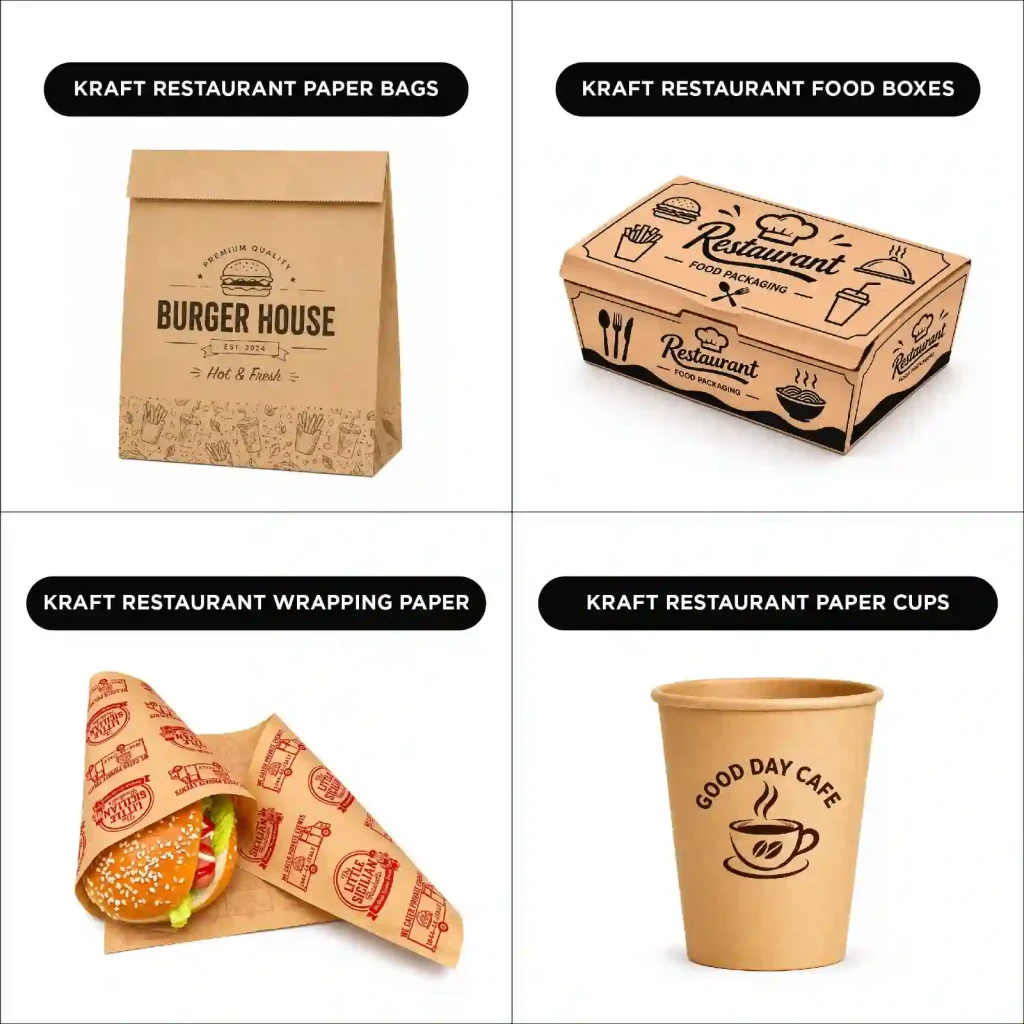
Packaging for food protects it during all stages of transport, storage, and sale. The right packaging ensures food is presentable and safe to eat when it reaches the customer.
Different types of foods require different kinds of packaging. Hot and greasy food needs a different type of packaging than dry food. A long shelf-life food needs different packaging than that of a food with a short shelf life.
Kraft Paper Food Packaging
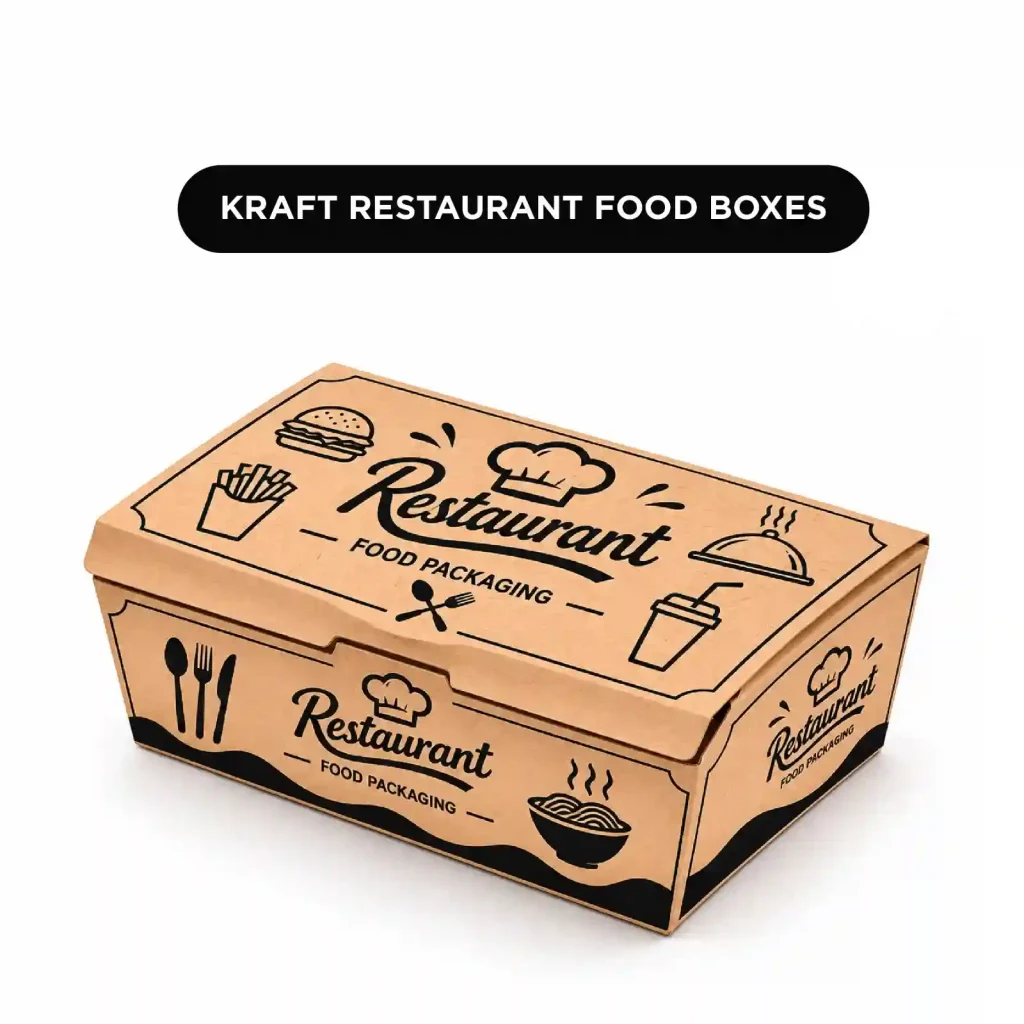
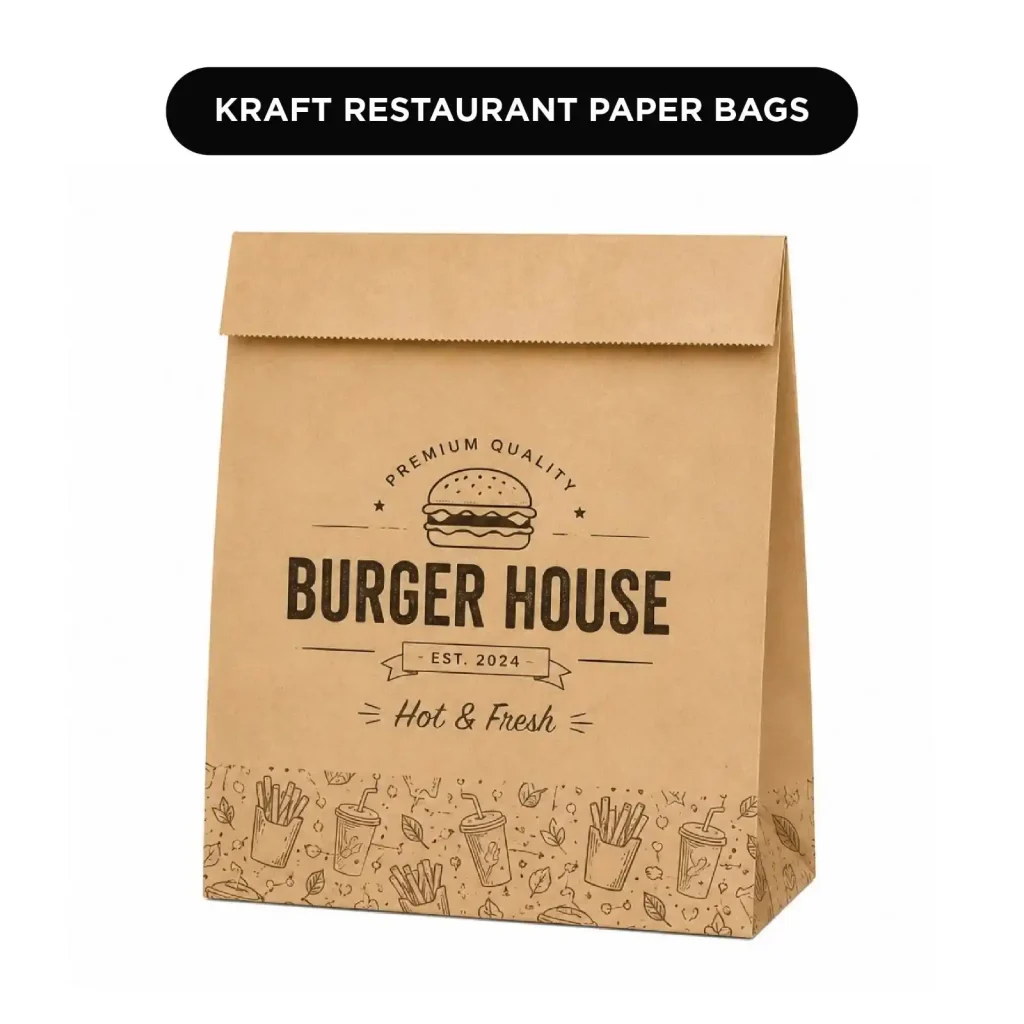
Kraft paper is a natural-looking, strong paper made from wood pulp. It’s popular with bakeries for bags and wraps and take-out boxes and with cafes for take-away boxes and pouches.
With unbleached kraft paper, the natural color is preserved, while bleached kraft paper gives a cleaner surface for print jobs.
If you’ll be in contact with food, choose food-grade kraft. Plain kraft paper is very porous and absorptive and will soak up oils and moisture, so it’s a good idea to coat the paper with PE, PLA, or aqueous coatings to protect food from the paper. Kraft paper has the added benefit of being cheaper than foil.
Corrugated Food Packaging
Corrugated board has a fluted paper layer between two linerboards. This structure adds strength, rigidity, and natural insulation.
Pizza boxes are the classic example. Delivery boxes, outer cartons, and food shipping crates also depend on corrugated food packaging for stacking strength.
Corrugated suits dry or protected foods best. Wet, saucy, or greasy items need a liner or coating to stop leaks and soft spots.
Greaseproof Paper Food Packaging
Greaseproof paper is dense, oil-resistant paper made for direct food contact. Burger joints use it for sandwich wraps. Fry shops line baskets with it. Bakeries wrap pastries in it to keep trays clean.
Some grades add a food-safe coating for extra moisture resistance. Greaseproof paper food packaging differs from wax paper. Wax paper uses a wax layer that melts under heat, while greaseproof paper handles warm foods better.
Compostable Food Packaging Solutions
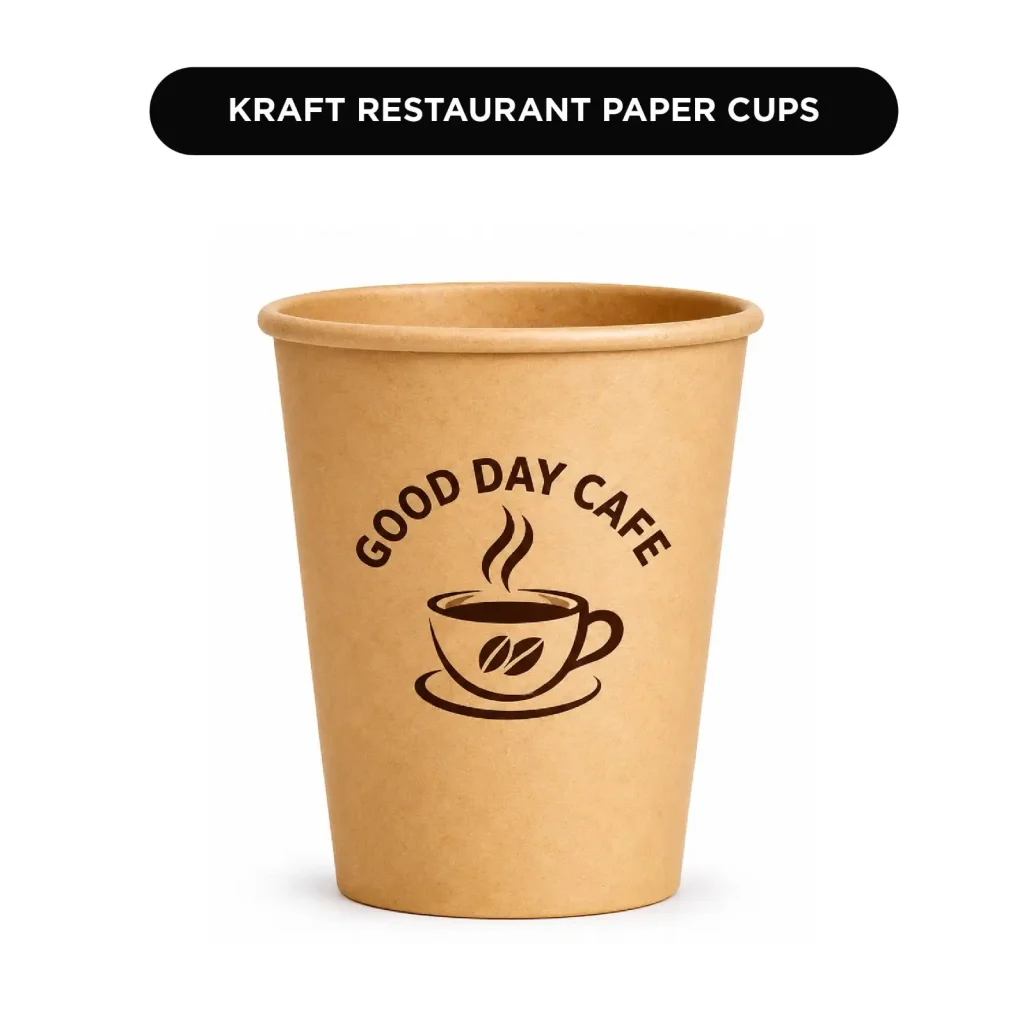
Compostable options include bagasse, molded fiber, PLA, and cellulose-based films. Food service teams use them for takeaway containers, cups, trays, and deli pots.
Bagasse comes from sugarcane pulp and handles hot, moist meals well. PLA comes from plant starch and suits cold items like salads.
Compostability depends on the material, the coating, and your access to industrial or home composting. A compostable package will not necessarily break down in a landfill, so check local options before you promise customers anything.
Food Packaging Materials Comparison
| Material | Best For | Strengths | Limitations | Sustainability |
| Kraft paper | Bakery bags, wraps, takeaway boxes | Strong, printable, natural look | Needs coating for wet or oily food | Often recyclable; coatings may limit this. |
| Corrugated board | Pizza boxes, delivery boxes, outer cartons | Rigid, insulating, stackable | Needs liner for greasy or saucy food | Recyclable when clean and dry |
| Greaseproof paper | Burgers, sandwiches, fries, pastries | Oil-resistant, food-safe for direct contact | Limited structure; not for liquids | Recyclability depends on coating. |
| Compostable materials | Hot meals, cups, trays, deli pots | Plant-based, suited to food service | Needs composting access; can cost more | Compostable only in suitable facilities |
No single material suits every food product. A crisp pastry, a creamy curry, and a cold salad each need different protection. Match the material to the menu item, not the other way around.
How to Choose the Right Food Packaging Material
Start with the food itself. Hot, oily, or saucy dishes need resistance to grease and moisture. Dry bakery items need far less.
Next, think about delivery time. Food delivery packaging must hold heat, resist steam, and survive bumps. Then weigh branding, budget, and local recycling or composting rules.
Use this quick checklist:
- Identify the food’s temperature, oil, and moisture.
- Estimate how long the food sits before it is eaten.
- Confirm the material is food-grade for your use.
- Check local recycling and composting access.
- Compare cost per unit with branding value.
Custom Food Packaging for Food Businesses
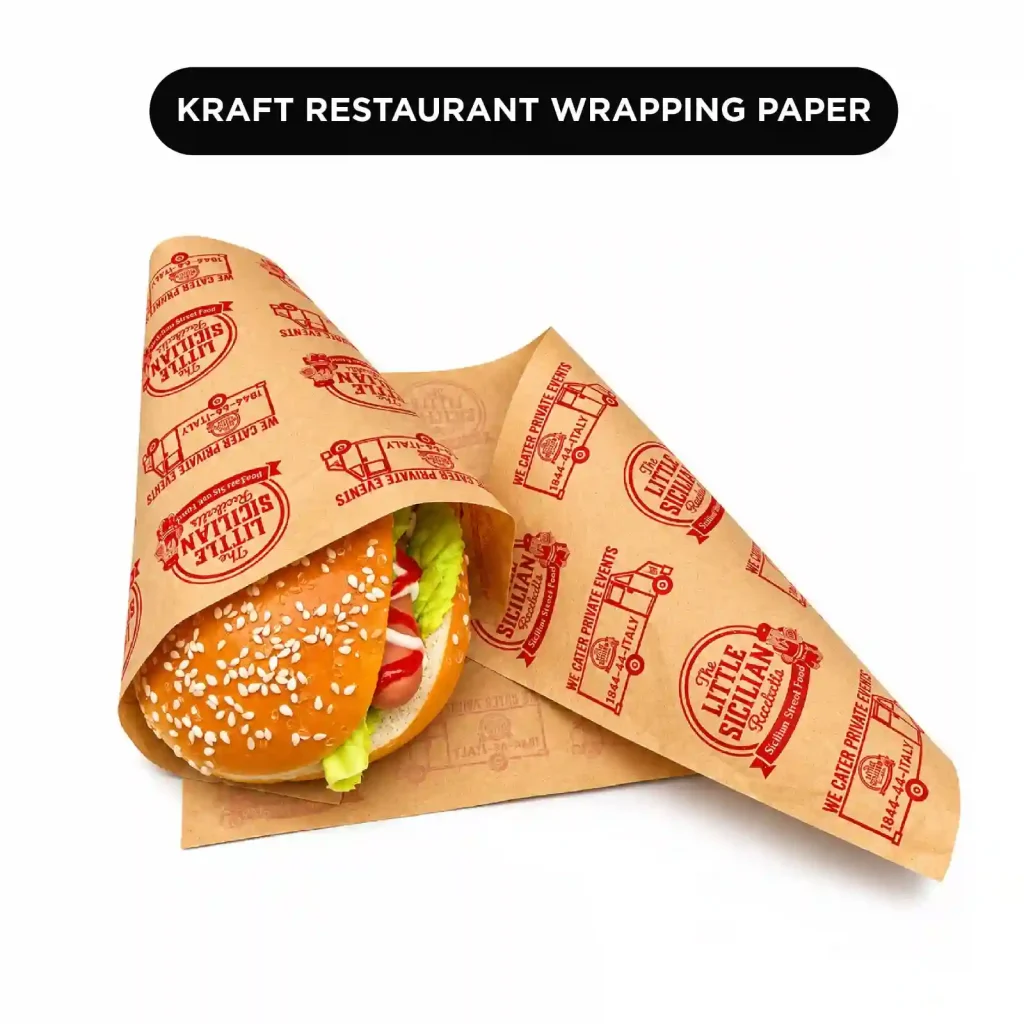
Restaurants, bakeries, cafés, and food brands can order custom kraft boxes, corrugated delivery boxes, greaseproof wraps, and compostable containers. Custom food packaging materials let you match size, strength, and finish to your menu.
Logo printing turns every bag and box into a small billboard. Use food-safe inks, especially on surfaces near food. Low MOQ options help new cafés and food trucks test designs without heavy stock.
Growing operations can switch to wholesale food packaging for steadier pricing and supply. Reliable restaurant packaging and bakery packaging keep service moving on busy days.
Choose the Right Food Packaging Material with Limcy Packaging
Match your packaging to your menu, your food temperature, and your sustainability goals. The right choice protects food, supports your brand, and fits your disposal options.
Contact Limcy Packaging to request custom sizes, material recommendations, samples, wholesale pricing, and branded food packaging. Tell us what you serve, and we will help you choose the right fit.
FAQs
Q1. What is the best material for food packaging?
Ans. It depends on the food. Greaseproof paper suits fries and burgers. Kraft suits dry bakery items. Corrugated suits pizza and delivery cartons. Compostable containers suit hot meals when composting is available.
Q2. Is kraft paper safe for food packaging?
Ans. Yes, when it is food-grade. Use coated kraft for oily or wet foods.
Q3. Is corrugated cardboard food-safe?
Ans. It is safe for outer packaging and for food-approved boxes such as pizza boxes. Avoid placing wet or greasy food directly on plain board without a liner or coating.
Q4. Are compostable food packaging materials always eco-friendly?
Ans. No. Their impact depends on the coating, disposal route, and access to local composting. If compostable packaging ends up in a landfill, it may not break down as intended.