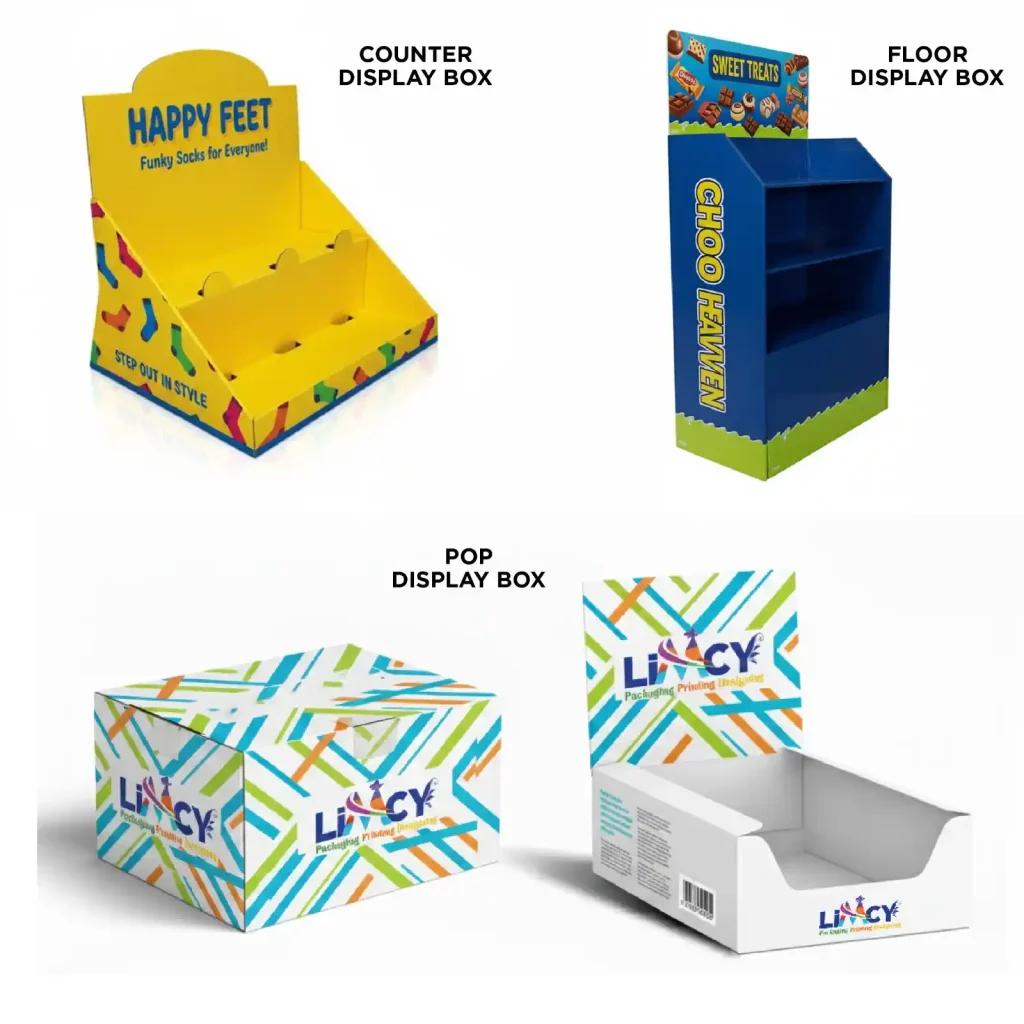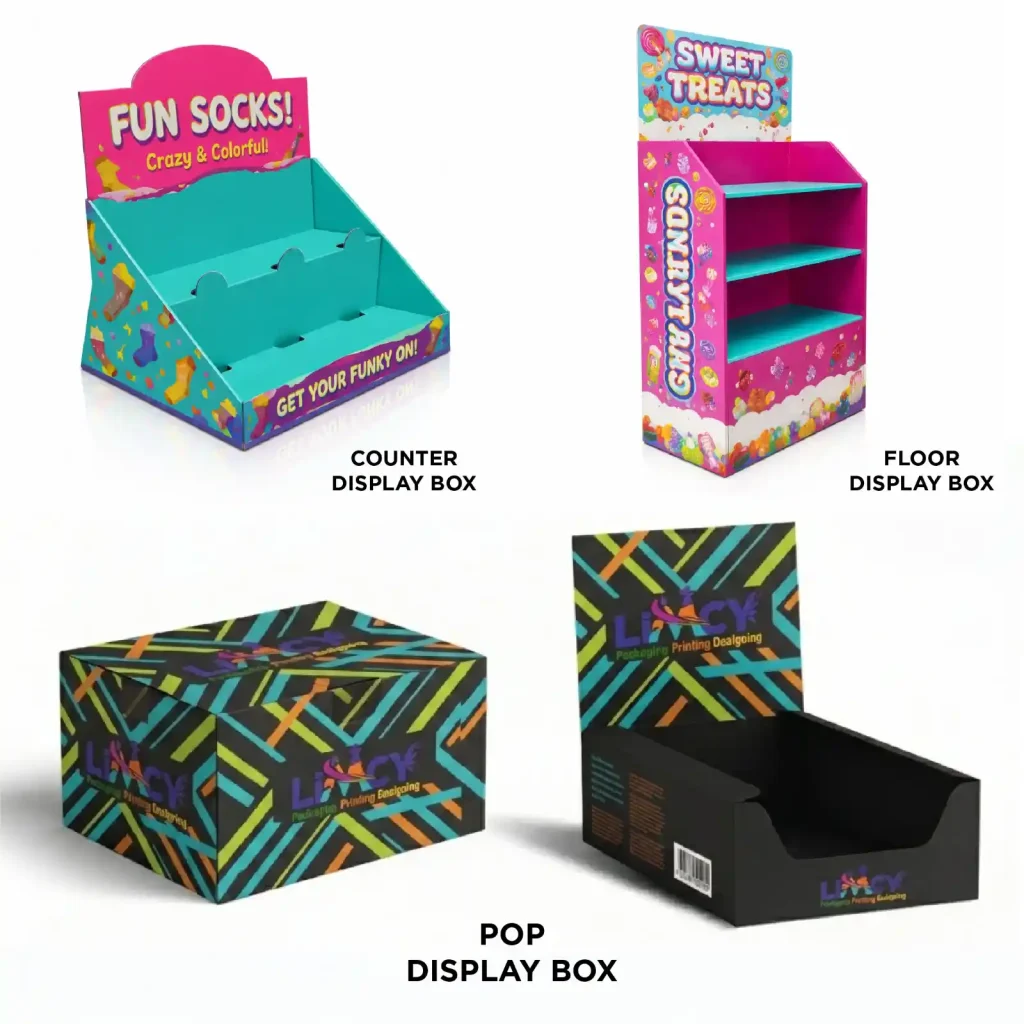
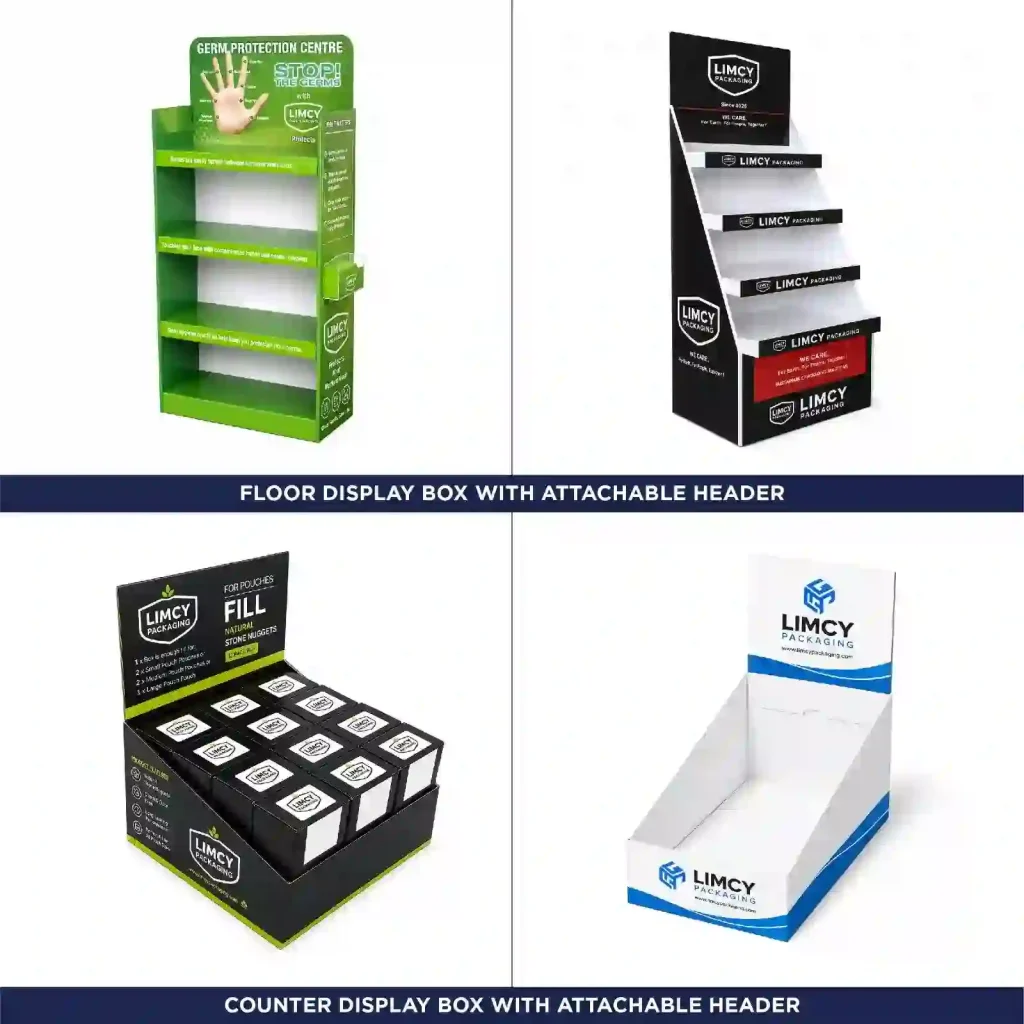
Retail displays have limited space to explain what a product is, why it matters, and which brand made it. That’s where retail display header cards come in—they add a clear visual sign above or behind the products. A well-planned header can make a display easier to recognize, give shoppers essential information, and create a finished presentation without redesigning the entire box. As a result, that single panel can connect packaging directly with overall merchandising.
What Are Attachable Header Cards?
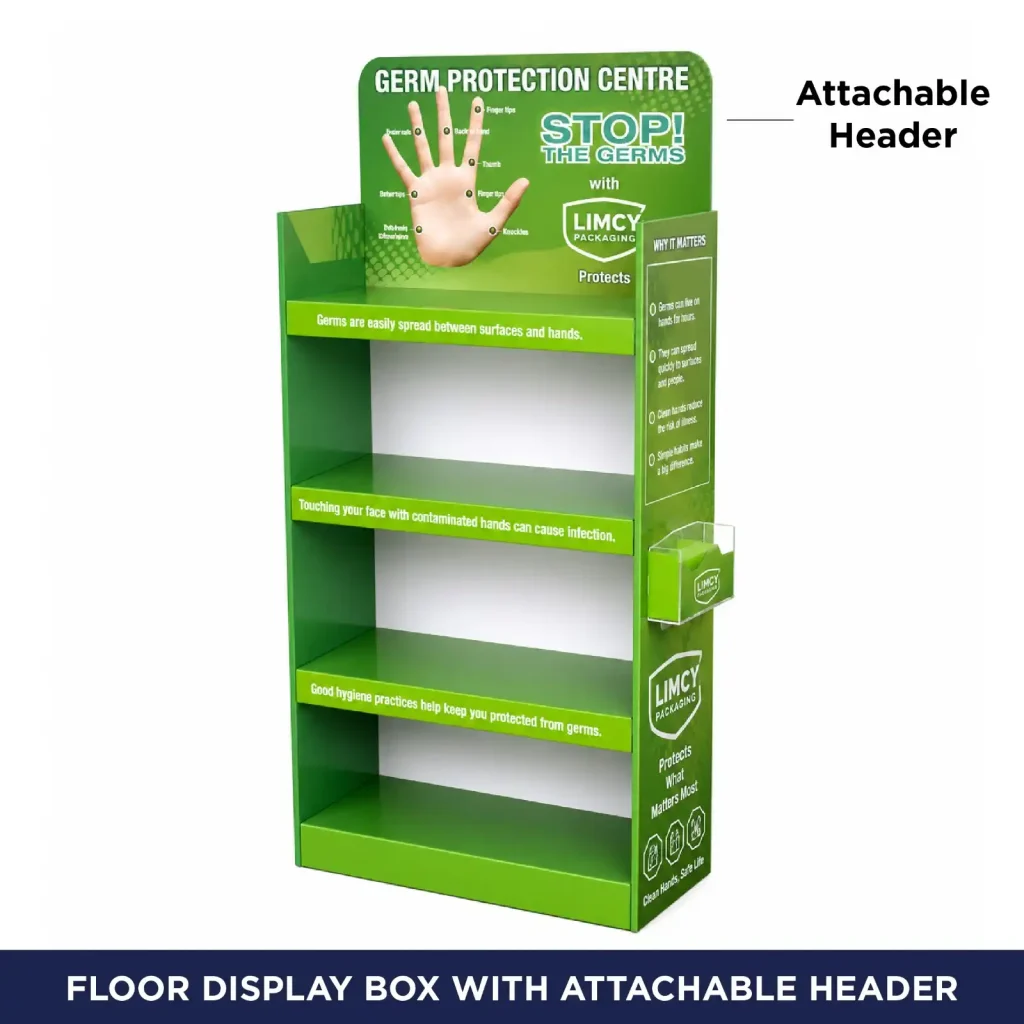
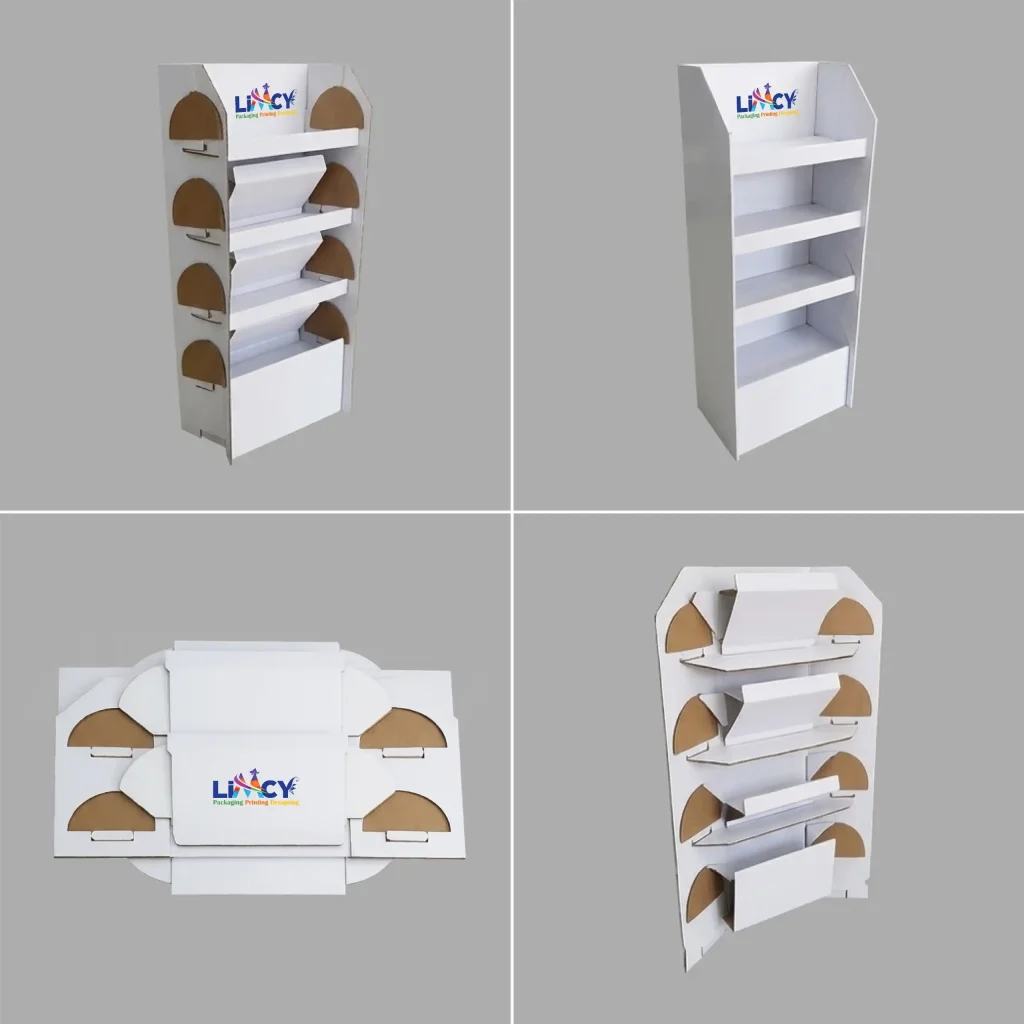
An attachable header card is a separate panel that connects to a retail display or product presentation. Depending on the structure, it may attach through slots, tabs, adhesive, or folded sections built into the display. Because they extend branding above the products while remaining part of the package, they pair naturally with cardboard or corrugated displays. For example, packaging teams often use header cards to label merchandise, communicate dimensions or usage information, and add branding to point-of-purchase displays.
Why Header Cards Matter in Retail Displays
A header card gives shoppers a visual reference before they examine individual products. It can feature a logo, product name, main benefit, price, promotion, barcode, or short message, depending on what the display needs to communicate. Because of this, display header cards are useful for brand recognition, product identification, and point-of-purchase communication. They can also help a display look organized, since the upper panel creates a focal point above the products.
Choosing the Right Attachment Method
The attachment method should match the display’s material, size, product weight, shipping conditions, and expected handling. Before selecting a structure, consider these options:
- Slots: Provide a simple mechanical connection and work well for displays built for quick assembly.
- Tabs: Secure the header directly into compatible openings in the display structure.
- Adhesive: Suits situations that call for a more permanent connection, as long as the surfaces support bonding.
- Folded structures: Let the header become part of the display itself, which reduces the need for separate attachment components.
The right choice ultimately depends on how retailers will assemble, ship, stock, and handle the display boxes. In other words, a visually attractive header is only effective when it stays stable and readable throughout its intended use.
Custom Retail Display Boxes with Header Cards
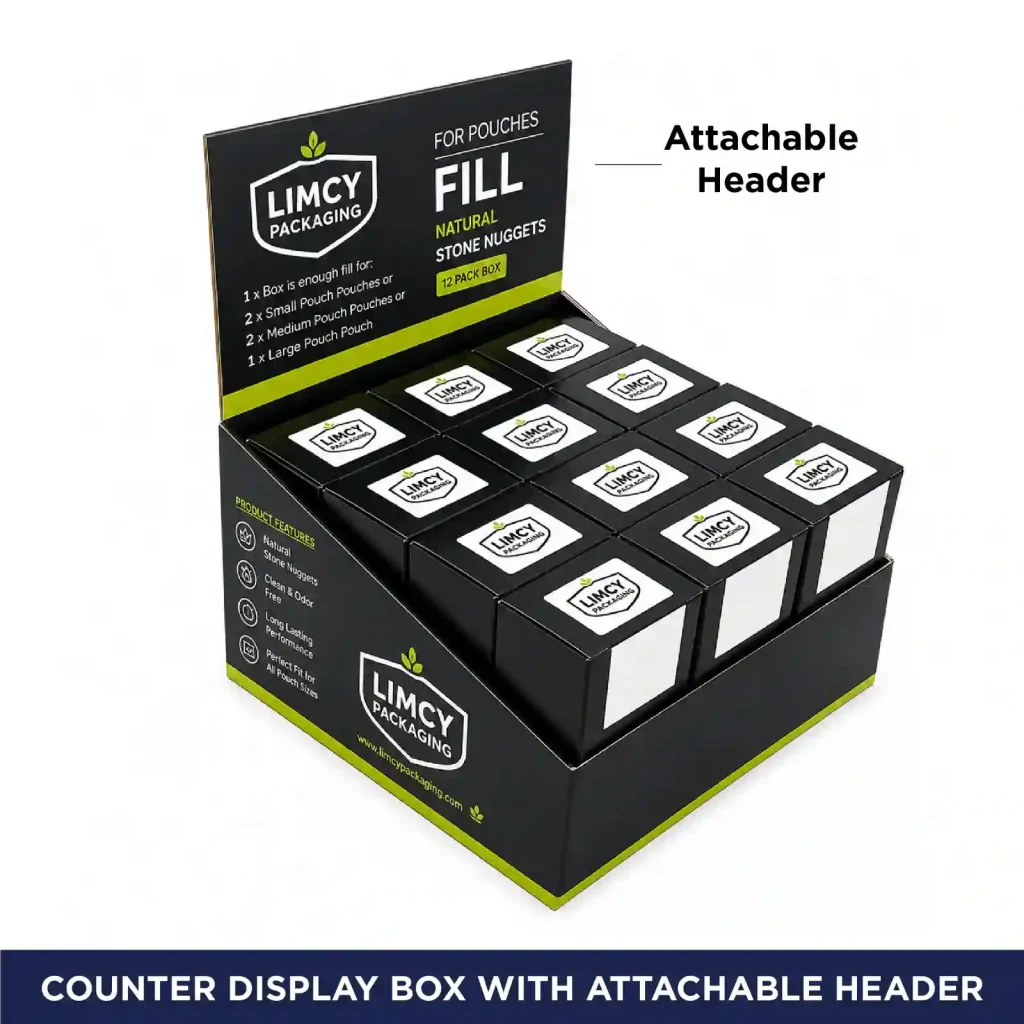
Brands get far more control over the relationship between the product tray and its header when they go the custom route. Coordinated printing can tie the two surfaces together, while die-cut shapes create a distinctive silhouette. Meanwhile, seasonal artwork can refresh the same display concept for holidays, launches, or promotions. Because product-specific messaging can also change between campaigns, brands don’t need every element of the display to carry the same amount of information. This approach works across cardboard display boxes, corrugated display boxes, POP display boxes, and other product display boxes, as long as the structure supports the header.
Common Header Card Design Mistakes
The most common problems are usually basic ones. Overcrowded text makes the header difficult to scan, while weak contrast can make important information disappear from a distance. Incorrect sizing may cause the card to overpower the products or become visually insignificant. In contrast, weak attachment points create stability problems, and inconsistent fonts, colors, or logos can make the display look disconnected from the wider brand. Because of this, it helps to treat the header as part of the packaging system rather than an afterthought you add at the end
How to Choose the Best Header Card Design
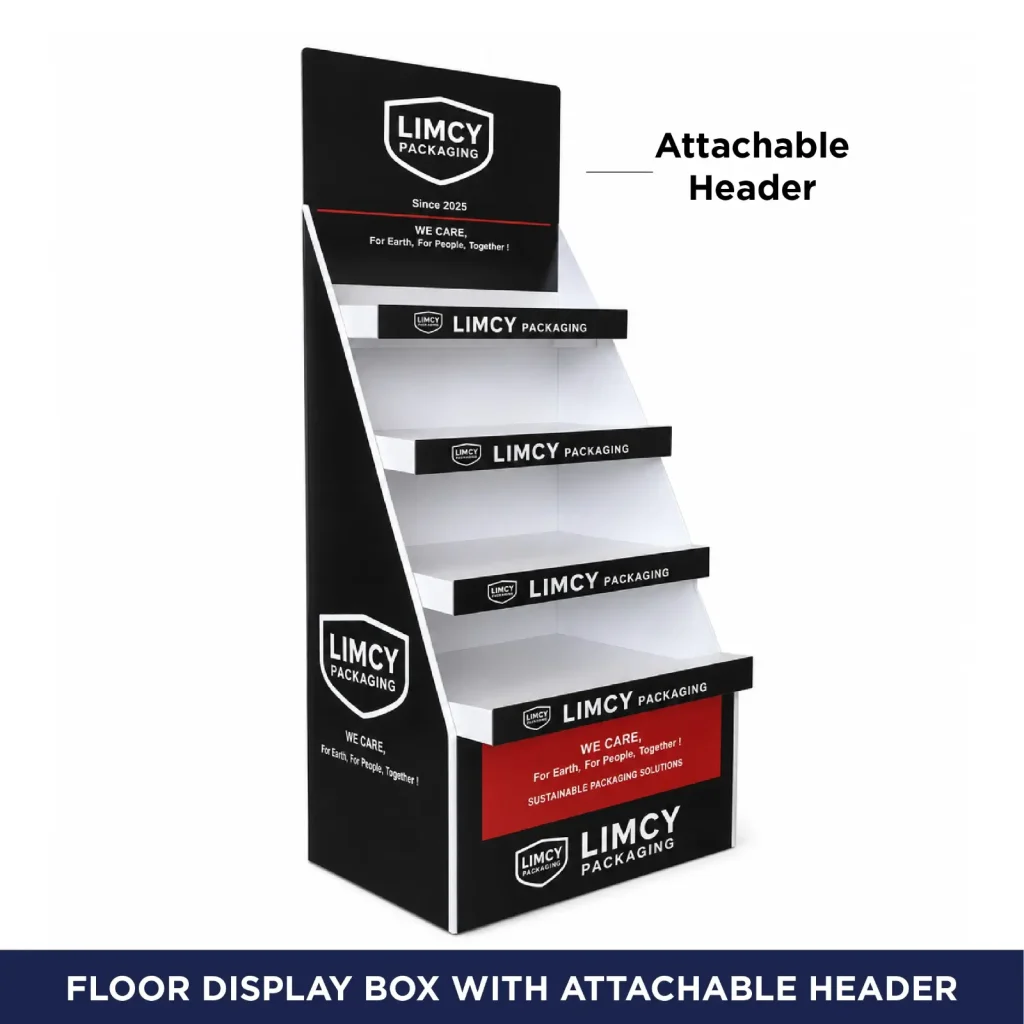
Choose the header design based on the product, display location, campaign duration, target audience, brand style, and budget. For instance, counter displays may need bold, compact headers, while floor displays can support larger designs. Similarly, seasonal campaigns may benefit from replaceable headers, whereas long-term displays need durable structures. Ultimately, the best design balances visibility, readability, stability, and brand identity.
| Design factor | What to consider |
| Message | Logo, product name, benefit, price, or promotion |
| Structure | Slots, tabs, adhesive, or folded connection |
| Material | Cardboard or corrugated board strength |
| Handling | Shipping, assembly, stocking, and customer use |
Custom Display Boxes & Header Cards by Limcy Packaging
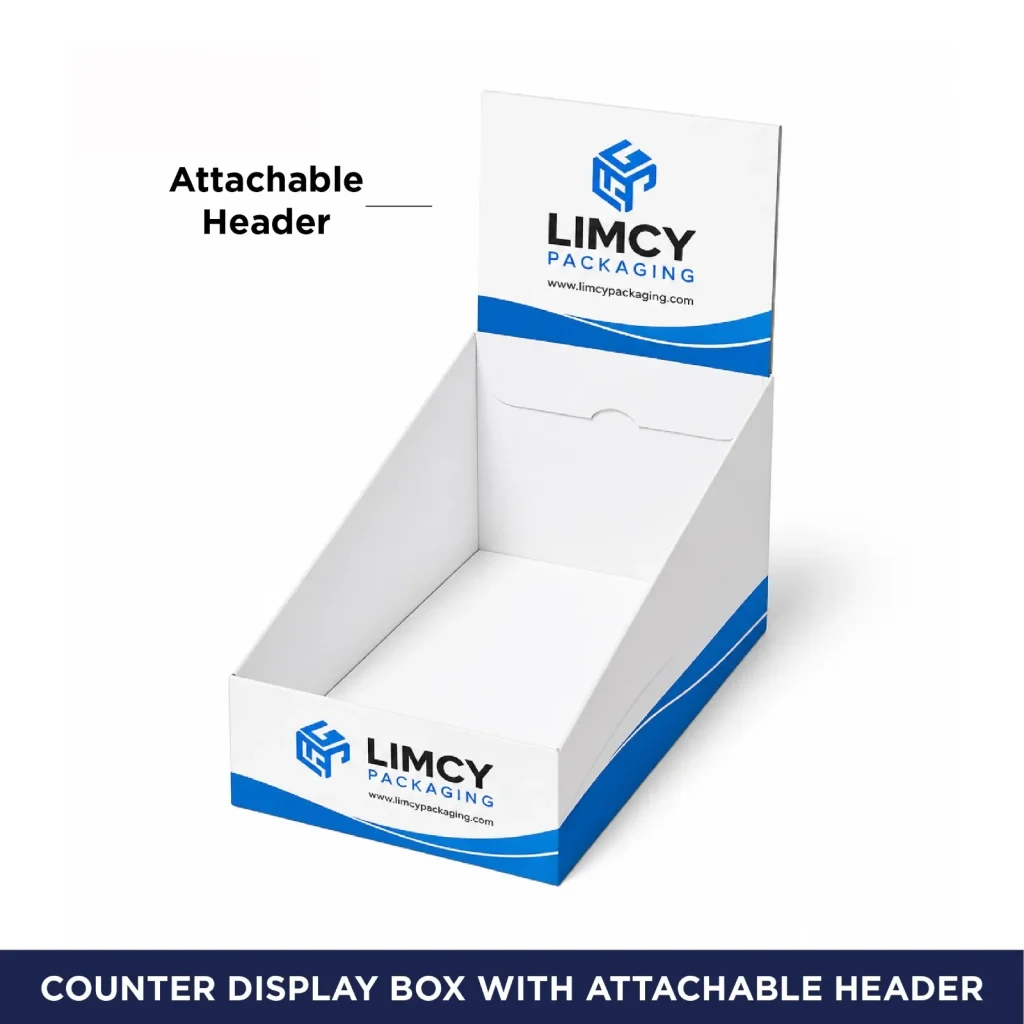
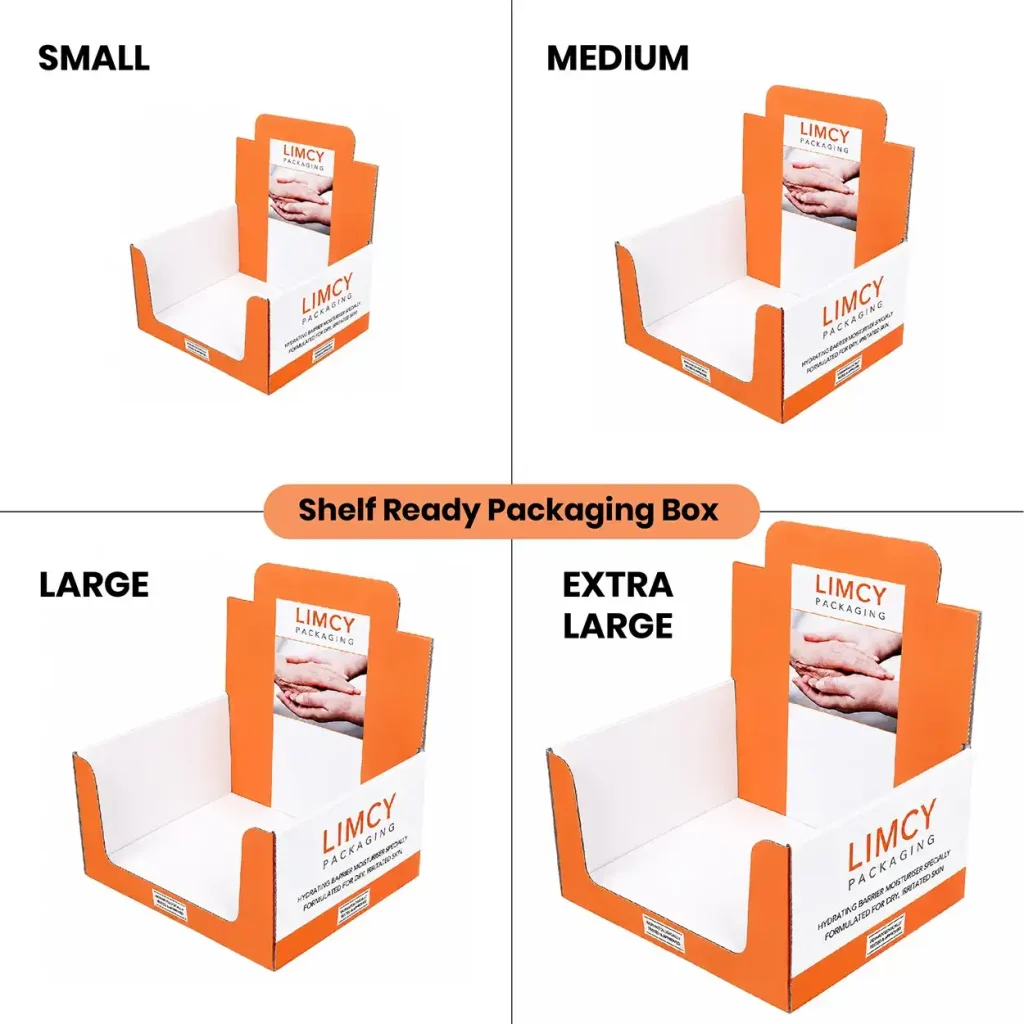
For brands looking for custom retail display boxes with header cards, Limcy Packaging offers custom floor, counter, POP, and shelf-ready displays, along with shelf-ready custom display boxes that feature folding or tear-away headers. The company also provides cardboard and corrugated display options that adapt to different products, layouts, and retail environments. As a result, it becomes easier to coordinate the display box, header card, branding, and product presentation into a single, cohesive packaging solution.
Conclusion
Retail display header cards combine branding with practical display structure. A well-designed header improves product visibility, readability, and brand recognition while keeping the display organized. Because the right size, material, message, and attachment method work together, they create a stable presentation that supports your products.
Ready to create custom retail display boxes? Get a quote from Limcy Packaging for custom display boxes and header cards tailored to your brand.
FAQs
Q1. What is a retail display header card?
Ans. It is a printed panel attached to a retail display to provide branding, product information, or promotional messaging. Its position helps shoppers identify the display quickly.
Q2. What information should be printed on a header card?
Ans. Use the information that matters most for the display, such as the logo, product name, key benefit, promotion, price, barcode, or short supporting message.
Q3. Can header cards be attached to cardboard display boxes?
Ans. Yes. Header cards can be designed for cardboard display boxes using slots, tabs, adhesive, or folded structures, provided the attachment method suits the material and intended handling.